
DramaThe White House is getting a major upgrade, but it's far more than just a place for state dinners. President Donald Trump recently pulled back the curtain on an ambitious construction project, revealing an underground complex beneath the nation's most famous residence that he says is designed to be an impenetrable fortress.
Reporters joined President Trump on a Tuesday in May 2026 for a public tour of the ongoing work, navigating through the sounds of drills and hammers. What began as a plan for an expansive ballroom has evolved, according to the President, into a sophisticated defensive structure. He outlined a vision for the facility that extends far beyond ceremonial gatherings, portraying it as a critical safeguard for current and future commanders-in-chief.

During the walk-through, President Trump detailed specific features intended to ensure maximum security. The complex reportedly incorporates impenetrable steel throughout its construction, designed to withstand significant impact. Windows are said to be outfitted with glass nearly four inches thick, a measure against ballistic threats. Perhaps most notably, he pointed to a roof system he referred to as a "drone port," which he claimed would provide aerial protection over a substantial area surrounding the White House, potentially redefining the security perimeter.
This ambitious undertaking has not been without its share of controversy and public discussion, even before its defensive capabilities were fully revealed. From its inception, the project has been one of the most talked about and legally contested building endeavors in recent memory. The debates surrounding the project have touched upon issues of historical preservation, the scope of presidential authority in renovating national landmarks, and the transparency of such large-scale government construction. Reports indicate that the construction originally commenced with the demolition of the East Wing of the White House, a significant alteration to the historic structure that immediately drew considerable attention and debate among historians, architects, and the public. This initial phase alone signaled the massive scale of the proposed changes, laying the groundwork for what would become an extensive underground development.
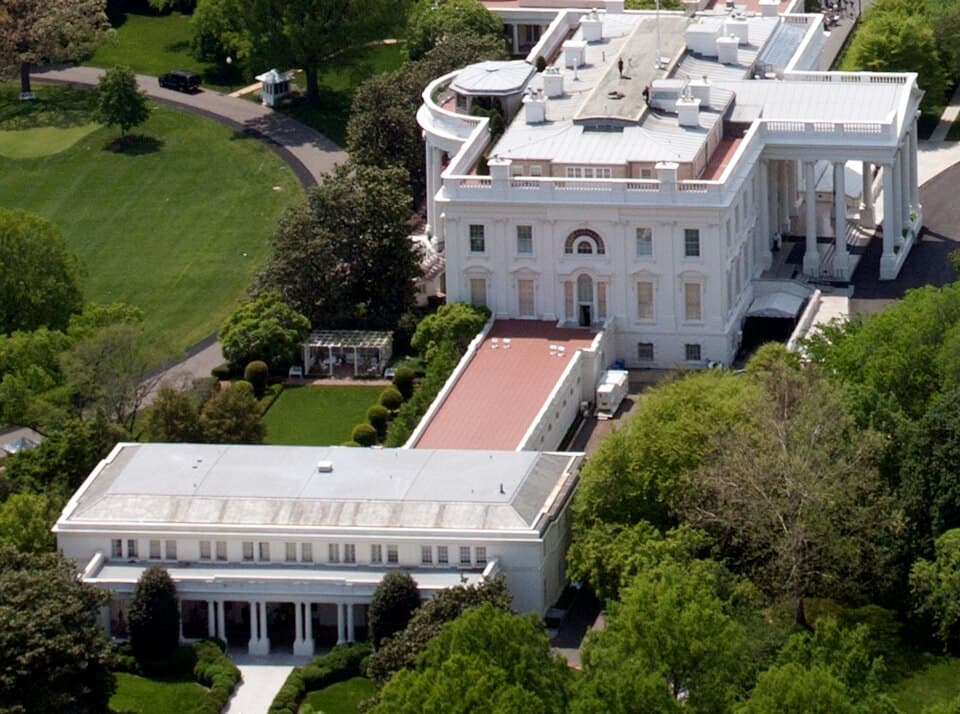
The transformation from a conventional ballroom concept to an "underground complex" underscores a shift in priorities, focusing heavily on advanced protective capabilities. This extensive subterranean development suggests a comprehensive approach to securing the President and key White House operations against a range of potential threats, both seen and unforeseen. The sheer size and depth of the construction required to house such features highlight the considerable investment in both engineering and strategic planning, aimed at creating a self-sufficient and highly secure environment.

The decision to significantly fortify the White House comes amid ongoing global security concerns and the evolving nature of threats against high-profile targets. Presidential security has always been paramount, with multiple layers of protection in place, but this project signals an unprecedented enhancement of physical defenses directly beneath the executive residence. The integration of features like impenetrable steel and thick ballistic glass speaks to a comprehensive strategy aimed at mitigating both ground-level and aerial risks, reflecting modern security challenges.
The inclusion of a "drone port" roof system is particularly noteworthy, marking a significant advancement in defensive infrastructure. This feature suggests a proactive stance against aerial threats, indicating a capability not just to detect but potentially to neutralize unmanned aerial vehicles over a wide area. Such technology could redefine the perimeter security of the White House, adding a new dimension to its protective envelope and reflecting a future-oriented approach to national security and defense.
Beyond its functional aspects, the "fortress" description carries significant symbolic weight, projecting an image of ultimate protection for the nation's leader. This could influence both domestic and international perceptions of American resilience and preparedness in the face of adversity. Moreover, an underground, fortified complex could play a critical role in continuity of government plans, ensuring that the executive branch can continue to operate securely during national emergencies or attacks.
As construction continues, the full scope and operational details of this fortified White House complex remain a subject of intense public and political interest. President Trump's unveiling of its defensive capabilities has positioned the new ballroom not just as a venue for diplomatic events, but as a crucial, state-of-the-art bastion designed to shield the nation's highest office from any challenge. The project stands as a testament to an intensified focus on presidential security in an increasingly complex world.