Home
Explore
Notifs
Profile

Black-owned · Built for the global diaspora · Curated pins from Black and melanated creators across hair, style, beauty, home, and art.

Formerly Melaninterest.com

m
melanin
AboutHelpTermsPrivacyCommunity GuidelinesCreators

© 2026 Melanin. All rights reserved.

Mmelanin
HomeExploreCreatorsNewsCreate
Ctrl+K
Log inSign up
Mmelanin
HomeExploreCreatorsNewsCreate
Ctrl+K
Log inSign up
Senator Markey Demands Answers on TikTok Data Security — Melanin News | Melanin
Mmelanin
HomeExploreCreatorsNewsCreate
Ctrl+K
Log inSign up
All news
Senator Markey Demands Answers on TikTok Data SecurityCulture

Senator Markey Demands Answers on TikTok Data Security

4d ago

Senator Ed Markey is not letting up on TikTok. The Massachusetts Democrat is now pushing for answers on a deal that was supposed to put the app's U.S. future to rest, demanding full transparency on how American users' personal data is truly being kept safe from foreign influence and manipulation.

On a recent Friday, May 29, Markey fired off formal letters to both TikTok USDS, the platform's newly formed U.S. joint venture, and Oracle, the cloud computing giant tapped as its "Trusted Security Partner." The senator wants a deep dive into the specifics, especially how content algorithms are protected from potential Chinese government interference. He specifically questioned Oracle about the contractual terms governing its review of ByteDance's source code, aiming to understand the true extent of independent oversight the company holds.

Image related to Senator Markey Demands Answers on TikTok Data Security
Related image from the original report Source

Markey also pressed TikTok USDS for the terms of its licensing agreement with ByteDance and a detailed explanation of its plan to review the app's extensive two billion lines of source code. A critical point of his inquiry involves how the U.S. entity plans to distinguish between legitimate commercial content curation tools and any potentially malicious code, and whether ByteDance has accessed any user-related data since the deal's closure. Markey stated, "The divestment deal has left the Congress and the American people rightfully wondering whether President Trump's TikTok deal is a national security risk."

This fresh scrutiny comes roughly four months after TikTok's Chinese parent company, ByteDance, finalized an agreement to shift control of its U.S. user data and operations to TikTok USDS. This restructuring, a $1.5 billion corporate endeavor dubbed "Project Texas," was designed to sidestep a long-looming U.S. ban on the wildly popular platform, used by over 200 million Americans. The fundamental concern from the U.S. government has always centered on ByteDance's ownership by a Chinese entity. Lawmakers fear China's 2017 National Intelligence Law could compel ByteDance to hand over American user data to Beijing or allow manipulation of TikTok's algorithm to spread propaganda or disinformation, raising alarms about potential espionage and foreign influence campaigns.
Under Project Texas, all U.S. user data is meant to be relocated to American servers, preventing it from ever touching Chinese infrastructure. Oracle, based in Austin, Texas, is central to this security architecture, tasked with leading security checks, scrutinizing TikTok's code and software, and storing all American user data on its cloud servers. The initiative also established the TikTok U.S. Data Security Committee (USDS), a U.S. committee whose leadership requires U.S. government approval, to oversee security protocols. TikTok USDS was formally launched on January 22, 2026, as a majority American-owned joint venture. Reports detail its ownership structure, which includes Oracle, private equity firm Silver Lake, and Abu Dhabi-based MGX each holding a 15% stake. ByteDance reportedly retains a 19.9% ownership, with other investors, including Michael Dell, holding the remaining shares.

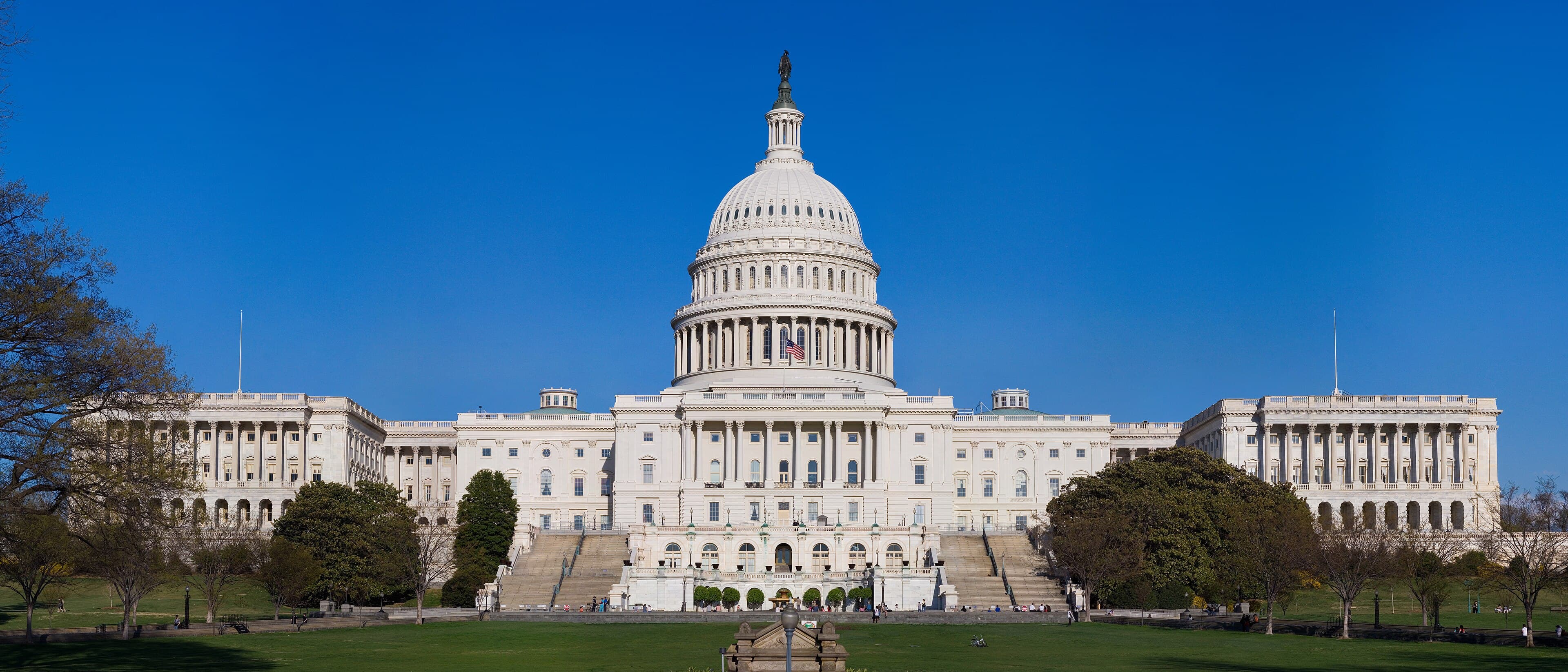
United States Capitol
United States Capitol Source

Despite these elaborate measures, Senator Markey's investigation underscores persistent doubts. He voiced a "broader worry that the divestment has left Congress and the public uncertain about whether the arrangement carries real national security risks," specifically citing "the possibility of Chinese-driven manipulation of the algorithm that decides what content reaches American screens." This ongoing saga is rooted in a complex history of U.S. government attempts to rein in TikTok. Back in 2020, then-President Donald Trump initially proposed a ban on the app, issuing executive orders to force ByteDance to divest, though these actions were subsequently blocked by courts.

The legislative efforts intensified in 2024. In March, the House of Representatives approved legislation aimed at compelling ByteDance to sell TikTok to U.S. ownership, a move mirrored by the Senate in April. President Joe Biden signed this legislation, known as the Protecting Americans from Foreign Adversary Controlled Applications Act (PAFACA), into law. This act set a deadline for ByteDance to sell TikTok or face a ban, intending to prevent the Chinese government from manipulating the app's algorithm or content for its 170 million American users. However, the enforcement took a contentious turn. President Trump, who later rejoined TikTok and credited the platform with boosting his appeal among younger voters, repeatedly extended deadlines and ultimately chose not to enforce the law, even after the Supreme Court upheld its constitutionality in January 2025. This led to TikTok voluntarily suspending its U.S. services on January 19, 2025, before being restored after President-elect Trump signaled a potential extension. On January 20, 2025, the first day of his term, Trump signed an executive order halting enforcement for 75 days to explore a potential sale.

Senator Edward J. Markey, a veteran politician born in Malden, Massachusetts, in 1946, has a long-standing record of public service. After earning his bachelor's degree and J.D. from Boston College and serving in the U.S. Army Reserve, he began his political career in the Massachusetts House of Representatives from 1973 to 1976. He then served 18 terms in the U.S. House from 1976 to 2013 before his election to the U.S. Senate in 2013. As a member of the Commerce, Science, and Transportation Committee, Markey has consistently been a national voice on consumer protection, clean energy, and technology policy, advocating for openness and competition in telecommunications. His current push for transparency regarding TikTok aligns with his consistent focus on ensuring accountability and security in the digital realm.

Markey's demand for detailed explanations highlights the persistent lack of transparency that has plagued the TikTok deal from its inception. His concerns reflect a broader anxiety that, despite the multi-billion-dollar corporate restructuring, the underlying risks of foreign influence remain. With TikTok serving as a dominant platform for communication, entertainment, and news for a significant portion of the American populace, the integrity of its data and algorithms is not merely a technical issue; it's a matter of national security and digital sovereignty. The possibility of an adversary manipulating content to sway public opinion or harvest sensitive data poses a serious threat in an increasingly interconnected world.

The senator's latest move ensures that the spotlight remains firmly on TikTok's operations and its commitments to the U.S. government and its users. The questions he has raised go to the heart of whether Project Texas is truly a robust shield against foreign interference or merely a complex facade. As the platform continues to navigate its precarious position in the U.S., the answers TikTok USDS and Oracle provide will be critical in shaping public trust and potentially influencing future regulatory actions concerning foreign-owned social media giants.