 CultureCulture
Turning 30 often feels like a milestone, but for many men, it also marks a quiet shift in their bodies. What once seemed like an endless reservoir of energy and a forgiving metabolism begins to show subtle signs of change. A recent report, published on May 29, 2026, by Jeric Macaraan, brings this reality into sharp focus, suggesting that strength training isn't just a gym trend, but a critical intervention for how men age.
The report highlights that while three decades isn't old, the human body has already started a measurable decline. As men enter their early 30s, the margin for error diminishes, recovery slows down, muscles begin to soften, and the metabolism that once tolerated every indulgence becomes less forgiving. This isn't just about feeling tired; it signals a compounding decline that can accelerate if left unaddressed. Macaraan's findings pinpoint consistent strength training as the most effective tool to combat this, proving more impactful than supplements or quick-fix biohacks. Men who integrate regular resistance work early in their thirties are reportedly able to maintain their physical sharpness, capability, and power for decades longer.
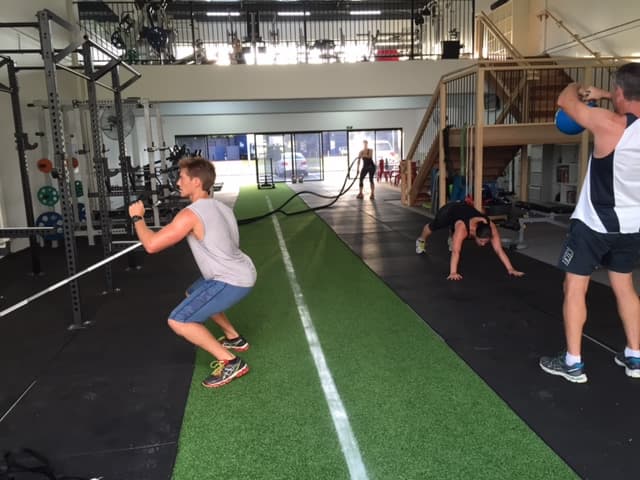
This perspective is backed by a growing scientific consensus on age-related muscle loss, a condition known as sarcopenia. Research indicates that this process can begin as early as the 30s, with the body losing between 3 and 8 percent of its muscle mass each decade thereafter. This lost muscle tissue is often replaced by fat, which in turn depresses the metabolism and makes everyday physical demands increasingly challenging over time. Dr. Rosaly Correa-de-Araujo, an aging expert at NIH, has noted the impact, stating, "With aging, you start losing muscle mass, muscle strength, and have some limitations with your activities."
The reduction in muscle mass leads to greater weakness and decreased mobility, significantly increasing the risk of falls and fractures. A 2015 report from the American Society for Bone and Mineral Research found that individuals diagnosed with sarcopenia faced a 2.3 times higher risk of low-trauma fractures from falls. Dr. Marcio Soares, a geriatrician with the University of Miami Health System, further explained the timeline, observing that "Sarcopenia starts to become more obvious in your 60s and 70s, but muscle mass starts deteriorating much earlier." He also clarified, "If you lose too much muscle mass so that it starts to affect your daily life, you may be diagnosed with sarcopenia."
Beyond muscle loss, men also experience a gradual decline in testosterone levels, typically commencing around age 30 or 40 and decreasing by approximately 1 percent per year. This slow but steady retreat can manifest as fatigue, mood shifts, reduced performance, and diminished drive. Matthew Accetta, an exercise physiologist, detailed the connection, explaining that "Testosterone helps build muscle by generating proteins, which then increases muscle strength." Strength training, particularly through compound movements like squats, deadlifts, and bench presses, is reported to naturally stimulate the body to increase testosterone production, thereby supporting muscle repair, improving recovery, and sustaining strength gains without the need for prescriptions. Accetta also highlighted the accelerated nature of this decline, adding, "Once you hit age 60, the rate of muscle mass decline goes up, and you'll lose even more muscle mass because you're getting older, not producing as much testosterone, and you're not as active."
The common perception of a significantly slowing metabolism after 30 is also a frequent concern, often contributing to challenges in weight management. While a landmark 2021 study involving over 6,400 individuals across 29 countries challenged previous assumptions, finding that metabolism remains remarkably stable from ages 20 to 60 with only a 1-2% decline per decade, the actual culprit for perceived metabolic slowdown is often a decrease in physical activity and muscle loss. Muscle is metabolically active tissue, meaning it burns calories even at rest, so maintaining or building muscle mass through strength training directly counteracts age-related metabolic decline.
The importance of strength training extends to bone health, as bone density also begins to change with age, with bone loss starting in the 30s. Consistent resistance work signals the body to maintain bone density, a crucial factor for long-term health and independence. Other significant benefits of strength training after 30 include improved cardiovascular health, better blood sugar regulation, enhanced insulin sensitivity, and positive effects on mood, self-esteem, and cognitive function. Lauren Wentz, a physical therapist and certified strength and conditioning specialist, noted that a lack of muscle mass forces the body to work harder to stabilize joints, leading to increased tiredness.
Experts like Dr. Thomas W. Storer, director of the exercise physiology and physical function lab at Harvard-affiliated Brigham and Women's Hospital, affirm the potential for change. "Older men can indeed increase muscle mass lost as a consequence of aging," he stated, further adding, "It takes work, dedication, and a plan, but it is never too late to rebuild muscle and maintain it." This message of empowerment underscores that age-related decline is not an unchangeable fate.
An ongoing storyline related to muscle loss includes the impact of certain weight loss medications. Dr. Soares highlighted that popular GLP-1 inhibitors, while effective for fat loss, can also lead to a reduction in muscle mass. He cautioned that "With these novel drugs, the body isn't judicious about how it loses weight. This can be through fat or muscle loss," and that if these medications are stopped, "The pounds gained aren't evenly distributed by muscle and fat — you'll just gain fat." This observation reinforces the broader importance of proactive measures like consistent strength training and proper nutrition to ensure a healthy body composition.
The recommended entry point for men is two to three strength training sessions per week, each lasting 20 to 30 minutes and targeting all major muscle groups. The emphasis is on consistency over session length, starting with foundational compound lifts such as squats, deadlifts, bench press, overhead press, and rows. Prioritizing proper form, gradual weight increases, adequate recovery, and sufficient protein intake are all crucial elements. This proactive approach offers a clear path for men to not just age, but to age stronger, maintaining vitality and independence for decades to come.