Home
Explore
Notifs
Profile

Black-owned · Built for the global diaspora · Curated pins from Black and melanated creators across hair, style, beauty, home, and art.

Formerly Melaninterest.com

m
melanin
AboutHelpTermsPrivacyCommunity GuidelinesCreators

© 2026 Melanin. All rights reserved.

Mmelanin
HomeExploreCreatorsNewsCreate
Ctrl+K
Log inSign up
Mmelanin
HomeExploreCreatorsNewsCreate
Ctrl+K
Log inSign up
Sleep Paralysis: The Widespread Phenomenon Affecting Millions — Melanin News | Melanin
Mmelanin
HomeExploreCreatorsNewsCreate
Ctrl+K
Log inSign up
All news
Sleep Paralysis: The Widespread Phenomenon Affecting MillionsCulture

Sleep Paralysis: The Widespread Phenomenon Affecting Millions

1w ago

It’s a nightmare you experience while awake: you open your eyes, you're conscious, but your body refuses to move, your voice won't come out, and a crushing pressure feels like it's stealing your breath. This is sleep paralysis, a frightening and surprisingly common experience that impacts millions worldwide.

Reports indicate that approximately one in ten people will encounter sleep paralysis at some point in their lives. While general population studies show a lifetime prevalence of about 7.6%, these figures surge dramatically in specific groups. Students, for instance, report rates as high as 28.3%, and psychiatric patients face an even higher incidence at 31.9%. For those who experience it more than once, a chronic form known as Recurrent Isolated Sleep Paralysis (RISP) is reported in 15% to 45% of cases.

Image related to Sleep Paralysis: The Widespread Phenomenon Affecting Millions
Related image from the original report Source

This unsettling phenomenon occurs when an individual regains awareness during the transition into or out of rapid eye movement (REM) sleep. During REM, the brain naturally paralyzes the body to prevent us from acting out our dreams. In sleep paralysis, the mind wakes up, but the body's muscle atonia—this natural paralysis—doesn't fully disengage. Episodes can last from a few seconds to several minutes, leaving individuals conscious but utterly powerless over their muscles.

The symptoms are often intensely distressing, ranging from the inability to move or speak to a sensation of chest pressure or suffocation. Many also report vivid hallucinations. These can include intruder hallucinations, where a menacing presence is perceived nearby; incubus hallucinations, which involve the suffocating chest pressure; and vestibular-motor hallucinations, creating sensations of floating or out-of-body experiences. The sheer terror of these moments can leave a lasting impact.

While the precise causes of sleep paralysis remain elusive, healthcare providers have identified several contributing factors. These include underlying sleep disorders like narcolepsy and obstructive sleep apnea, as well as insufficient or irregular sleep schedules, common in shift work or due to jet lag. Mental health conditions such as anxiety, bipolar disorder, post-traumatic stress disorder (PTSD), and panic disorder are also associated. Certain medications, including those for ADHD, and substance use disorder can play a role. A consistently linked factor is sleeping in the supine position, or on one's back. Research also points to a possible genetic component, suggesting that sleep paralysis can run in families.
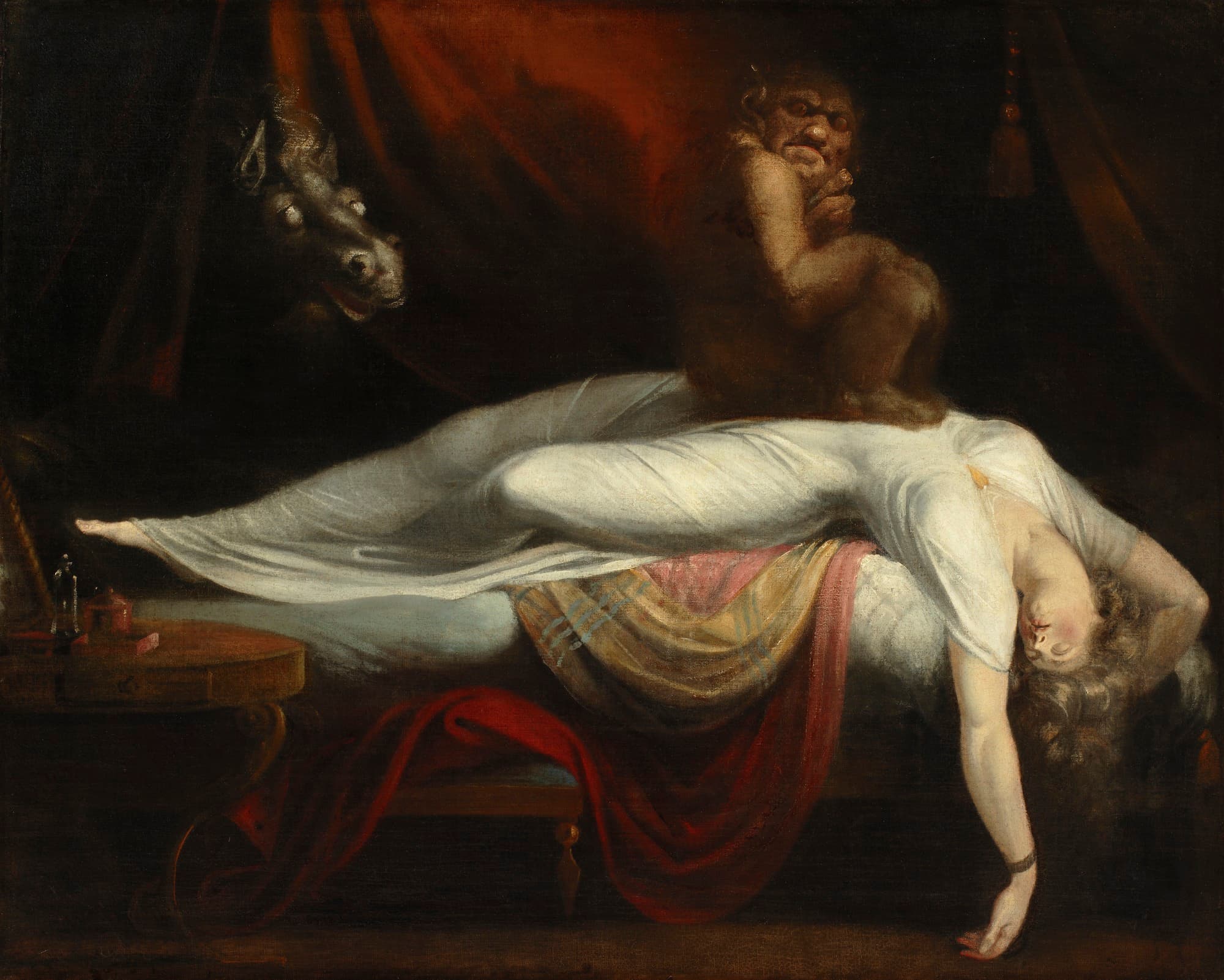
Sleep paralysis
Sleep paralysis Source

The impact of sleep paralysis is particularly pronounced within Black communities, where studies indicate it is experienced at higher rates compared to white populations. A 2005 study notably found that recurrent sleep paralysis was significantly more common among African American participants, especially those also dealing with panic disorder; 59% of African Americans with panic disorder reported recurrent episodes, in stark contrast to 7% of white individuals with panic disorder.

Dr. Vanessa Enku, an expert from Howard University's Sleep Disorder Center, suggests that African Americans are “especially vulnerable to SP due to a combination of genetic predisposition, diet, stress, and cultural beliefs.” She points to chronic psychosocial stressors—including unemployment, systemic racism, and financial strain—as significant contributors to the higher incidence among Black Americans. These experiences are often interpreted through rich cultural folklore, such as the belief in a “witch riding your chest.” Nelson Miller, a 51-year-old African American, shared his lifelong struggle with the phenomenon, recalling, “It felt like someone was holding me down. I couldn’t scream, I couldn’t move. I thought I was dying.” In response, Dr. Thomas J. Balkin, a past chairman of the National Sleep Foundation, has advised African Americans to prioritize improved sleep hygiene, recommending consistent bedtimes, avoiding caffeine and electronics before bed, and reserving the bedroom primarily for sleep and intimacy.

Sleep paralysis has also found its way into public discourse through hip-hop culture, sparking varied interpretations. Rapper Joey Bada$$, for example, has publicly referred to sleep paralysis as a “gift” and “the gateway to astral projection.” He suggests that the experience is “controlled by your mind” and that any fear during an episode is based on “spookism.” Bada$$ encourages individuals not to be afraid, advising them to “laugh at whatever you’re seeing,” claiming that remaining calm allows one to “literally move out your body” into the astral realm.

In stark contrast, minister Isaiah Saldivar reacted to these statements, asserting that sleep paralysis is “definitely a gift... from the devil” and that astral projection “opens you up to demons.” He issued a strong warning against welcoming sleep paralysis and astral projection, stating firmly that “the devil has no new tricks.”

Other artists have incorporated the experience into their work. Mid-30s emcee bbymutha, originally from Chattanooga and now living in Atlanta, named her album “sleep paralysis.” She revealed it was “one of the first things I remember from my childhood, going through those little attacks as a little kid.” While noting that melatonin and going to bed drunk can trigger her episodes, she has grown “used to it now.” More recently, artists Kembe X and Hippie Sabotage released their own album titled “Sleep Paralysis” on March 15, 2024, further embedding the phenomenon in contemporary music.

While generally considered harmless and not physically dangerous, frequent or distressing episodes of sleep paralysis can significantly disrupt sleep quality and daily life. The anxiety surrounding the anticipation of an episode can become a problem in itself. Treatment typically focuses on improving overall sleep hygiene, managing stress levels, and addressing any identified underlying sleep disorders or mental health conditions to help individuals regain control and peace of mind.