 Culture
New Research Uncovers Silent Kidney Damage from Sickle Cell Gene
Kidney disease disproportionately impacts Black communities worldwide, a silent crisis often linked to genetic factors. Now, Dr. Kabir Olaniran, a nephrologist and physician-scientist at UT Southwestern Medical Center, is shedding light on a critical, often overlooked contributor: the sickle cell gene itself.
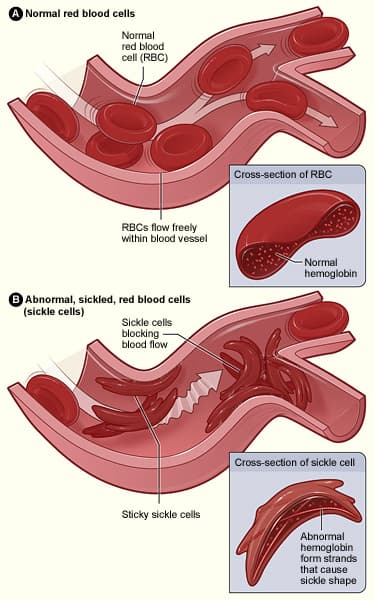
Dr. Olaniran’s research, particularly through the UT Southwestern Sickle Cell Kidney Study (SCeK study) he leads in Dallas, is overturning long-held medical beliefs. His work highlights that even carrying a single copy of the sickle cell gene, known as sickle cell trait, can lead to silent, continuous damage to the kidneys over time. This finding marks a significant departure from past medical guidance, which frequently described sickle cell trait as a benign condition, often telling individuals there was "nothing to worry about."

This crucial insight stemmed from Dr. Olaniran's early career observations. He noticed a glaring absence of concrete guidelines and long-term data for sickle cell patients experiencing kidney complications, a gap he committed to filling. The SCeK study is a longitudinal effort, meticulously collecting years of patient data to move beyond assumptions and establish evidence-based care. Participants with both sickle cell trait and sickle cell disease are followed annually, providing lifestyle information, blood, and urine specimens for in-depth metabolomic and genomic analysis. The study's core objective is to understand why some carriers develop kidney disease while others do not, with the ultimate goal of identifying new preventative strategies and therapeutic targets.
Dr. Olaniran’s professional journey is marked by extensive training and a deep commitment to addressing health disparities. He earned his medical degree from the University of Lagos in Nigeria before completing an internal medicine residency at Lincoln Medical Center in the Bronx, New York, where he also served as chief medical resident. His specialization continued with a nephrology fellowship through Harvard Medical School at Brigham and Women's Hospital and Massachusetts General Hospital in Boston. Further enhancing his expertise, he obtained a Master of Public Health degree with a focus on clinical effectiveness from the Harvard T.H. Chan School of Public Health. Board-certified in both internal medicine and nephrology, Dr. Olaniran joined the UT Southwestern faculty in 2019, where he serves as an Assistant Professor of Nephrology. His contributions have been recognized with prestigious awards, including the American Society of Nephrology's (ASN) Ben J. Lipps Fellowship grant and the William E. Mitch International Scholars Award, as well as Massachusetts General Hospital's Dennis A. Ausiello Outstanding Postdoctoral Fellow Award. Notably, he leads one of the few clinics nationally dedicated specifically to the intersection of sickle cell and kidney health.
Reports indicate the profound implications of these findings for global health. Dr. Olaniran emphasized this shift in understanding, stating, "Sickle cell trait has long been described as a benign condition, and so a lot of people who were screened were not told to follow up. In the last 15 to 20 years, we have come to realize that sickle cell trait causes silent, ongoing damage to the kidneys, and it is a serious risk factor for chronic kidney disease in the Black population worldwide, not just in the United States." He explained the gene’s evolutionary origins, noting, "The sickle cell gene occurred in response to malaria. Places like Nigeria, where I am originally from, have some of the highest rates of sickle cell because they have some of the highest rates of malaria. If you have one copy of the sickle cell gene, this confers significant protection and a lower risk of death from malaria. That is the reason why these genes are propagated in the African population."
The silent nature of kidney disease in its early stages poses a significant challenge. Dr. Olaniran highlighted this, explaining, "Kidney disease is silent. There are no early symptoms. There are some alarm symptoms, but very few people tend to have these, things like blood in the urine, or extremely bubbly or foamy urine indicating a lot of protein spilling out. In most people, there is just a silent reduction in kidney function called filtration, estimated using a test called eGFR. If a person is not seeing a doctor regularly and this is not being tested, they could develop pretty advanced kidney disease and never know." To counter this, he strongly advises Black Americans to know two critical numbers: their hemoglobin genotype, which reveals if they carry the sickle cell gene, and their estimated glomerular filtration rate (eGFR), a measure of kidney function. For individuals under 50, a healthy eGFR typically registers above 90.
This research is particularly significant within the broader context of genetic predispositions to kidney disease in Black communities. Beyond sickle cell, genetic factors like the APOL1 gene variants are known contributors to APOL1-mediated kidney disease (AMKD), a distinct genetic form of chronic kidney disease. These APOL1 variants evolved thousands of years ago in Sub-Saharan Africa, offering protection against trypanosomiasis, also known as African sleeping sickness. This historical adaptation explains their prevalence in populations of African descent, with approximately 13% of African Americans in the U.S. carrying two APOL1 variants that elevate their kidney disease risk. The scientific link between APOL1 and kidney disease was firmly established in 2010.
Public figures have also stepped forward to raise awareness about these critical health issues. Former NBA player Alonzo Mourning, who was diagnosed with AMKD, shared his personal journey, stating, "Learning the genetic cause of my condition was empowering. It provided a clear answer as to why the kidney disease developed despite me being at the peak of my physical health. There was nothing that I did 'wrong.' It was these genetic variants that were the cause." His experience underscores the importance of understanding genetic factors in kidney health.
Dr. Olaniran’s work represents a crucial step forward in addressing a significant health disparity. By identifying the silent threats posed by genetic factors and advocating for increased awareness and early screening, his research offers hope for improved prevention and management strategies, ultimately aiming to mitigate the devastating impact of kidney disease on Black communities.