 Culture
New Study Links Sexual Activity to Slower Cellular Aging
Could the fountain of youth be found in the bedroom? A 2017 study published in the journal Psychoneuroendocrinology suggests that regular sexual intimacy might do more for your body than previously thought, potentially influencing how quickly you age on a cellular level.
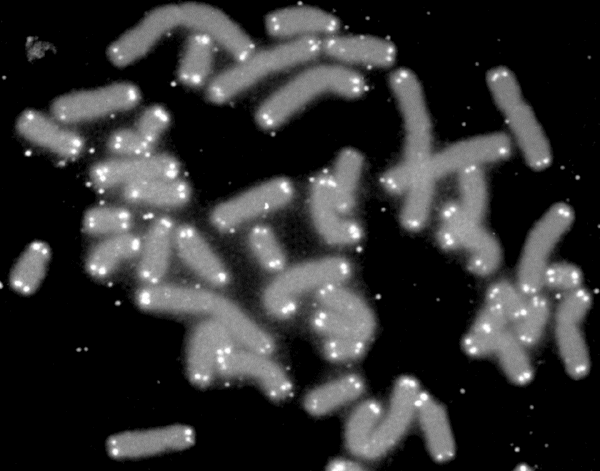
The research, conducted by scientists at the University of California, San Francisco (UCSF), specifically found that partnered women who reported any sexual activity within a week had significantly longer telomeres compared to those who were not sexually active. Telomeres are protective caps at the ends of our DNA, and their length is a key indicator of cellular aging and overall health.
The study, titled "Sexual intimacy in couples is associated with longer telomere length," was led by Tomás Cabeza de Baca from the Department of Psychiatry at UCSF. The research team included Elissa S. Epel, Theodore F. Robles, Michael Coccia, Amanda Gilbert, Eli Puterman, and Aric A. Prather. It involved 129 partnered women, categorized as either high-stress mothers caring for a child with autism or mothers of neuro-typical children.
Over one week, participants provided daily reports on their relationship satisfaction, perceived stress, partner support, and the frequency of physical intimacy. Researchers then collected blood samples to analyze telomere length in whole blood and Peripheral Blood Mononuclear Cells (PBMCs), along with telomerase activity in PBMCs. The correlation between sexual intimacy and longer telomeres remained significant even after accounting for factors like age, BMI, perceived stress, relationship satisfaction, and caregiver status. However, the study did not find a significant link between telomere length and relationship satisfaction, daily support, conflict, or telomerase activity on their own.
Telomeres are often likened to the plastic tips on shoelaces, essential for protecting our genetic material from damage during cell division. As cells divide and individuals age, these telomeres naturally shorten. When they become too short, cells can lose proper function, a process linked to an increased risk of age-related conditions such as cancer, heart disease, and diabetes, and even premature mortality. The enzyme telomerase plays a crucial role in maintaining and replenishing telomeres, helping to slow or even partially reverse this shortening process.
The concept of telomeres and their impact on aging gained widespread attention through the work of molecular biologist Elizabeth Blackburn, a Nobel laureate. Blackburn, along with her graduate student Carol Greider, discovered telomerase in 1985. She later co-authored the 2017 book "The Telomere Effect: A Revolutionary Approach to Living Younger, Healthier, Longer" with Elissa Epel, one of the UCSF study authors. Blackburn has highlighted that while chronological aging is inevitable, various lifestyle choices can accelerate telomere shortening, including chronic stress, negative thinking, poor diet, lack of exercise, and insufficient sleep. Conversely, healthy habits can help preserve or even extend telomere length.
Lead researcher Tomás Cabeza de Baca acknowledged the preliminary nature of their findings, stating, "Our findings, although important, were largely exploratory." He emphasized the complex potential mechanisms at play, noting, "There are many physiological and psychosocial mechanisms that may mediate the sex-telomere relationship." Baca proposed that "sexual intimacy may dampen the effects of stress by down-regulating stress response systems and up-regulating immune response. Over time, these patterns of stress function should result in longer telomere length." He expressed excitement for further research, adding, "There are so many exciting questions to ask regarding sexual intimacy's role in health!"
It is important to note the limitations of the UCSF study. As a small, cross-sectional sample, it captured data at a single point in time, meaning it could only establish a correlation between sexual intimacy and telomere length, not a direct cause-and-effect relationship. Researchers and subsequent reports were careful to point out that it cannot be definitively concluded that sexual activity *causes* telomere lengthening. It's possible that healthier individuals, who may already possess longer telomeres, are simply more likely to be sexually active. Furthermore, the findings are primarily generalizable to partnered mothers in long-term relationships.
This research contributes to a growing body of evidence exploring the broader health benefits of sexual activity and intimate relationships. Prior studies have linked high-quality relationships and sexual intimacy to improved physical and mental health, including greater overall happiness, increased life satisfaction, better heart rate variability, reduced daily somatic symptoms, lower cortisol levels, and a more robust immune response. While the UCSF study offers an intriguing glimpse into the cellular benefits, it also underscores the multifaceted ways in which intimacy can impact well-being.
The findings suggest a fascinating area for future scientific exploration, potentially offering deeper insights into how our intimate lives intersect with the fundamental processes of aging. While more research is needed to fully understand the causal links and broader implications, this initial study opens a compelling dialogue about the unexpected connections between intimacy and longevity.