Culture
Schlitz Beer Calls It Quits After 177 Years
A chapter closes on an American brewing legend. Schlitz, the storied lager that once defined Milwaukee's beer scene, is officially ceasing production after a remarkable 177-year run. Its final batch is slated to be brewed on May 23, 2026, marking the end of an era for a brand that was once the world's top-selling beer.
Pabst Brewing Company, the current parent company of the Schlitz brand, confirmed the difficult decision. The company pointed to escalating costs associated with product storage and shipping, alongside a noticeable decline in the beer's overall popularity, as the primary factors leading to the discontinuation. Zac Nadile, Pabst's head of brand strategy, explained that "continued increases in our costs to store and ship certain products" necessitated the "tough choice to place Schlitz Premium on hiatus." He added that any brand put on hiatus remains a "cherished part of our history and hopefully our future," suggesting a theoretical possibility for its return if customer feedback and market conditions align.

The final 80-barrel batch of Schlitz will be brewed with a sense of ceremony at the Wisconsin Brewing Company in Verona, Wisconsin, on the same day the pre-orders open, May 23, 2026. Kirby Nelson, the seasoned brewmaster at Wisconsin Brewing Company with 48 years in the industry, will oversee this special production. Nelson expressed a deep respect for the brand's legacy, stating that Schlitz "deserved a proper sendoff. One with dignity and respect," and is calling this final batch "Wisconsin Brewing Company's love letter to our state." To honor its peak, Nelson plans to use a mid-20th-century Schlitz beer recipe composite, primarily from 1948, a time when Schlitz held the title of the world's best-selling beer.
Enthusiasts looking to secure a piece of history can pre-order 16-ounce four-packs on May 23, 2026, directly from the Wisconsin Brewing Company's website. The beer will then become available for purchase at the Verona brewery on June 27, 2026. Additionally, there are plans for Schlitz to be served at Old World Wisconsin's 50th-anniversary celebration in Eagle on July 4, 2026, offering one last public toast to its storied past.
Schlitz's origins stretch back to 1849 in Milwaukee, Wisconsin, when German immigrant Georg August Krug established a tavern with an attached brewery. A pivotal moment came in 1850 with the arrival of Joseph Schlitz, a 20-year-old bookkeeper from Mayence, Germany. Following Krug's unexpected death in 1856, Schlitz took over management and later married Krug's widow, Anna Maria Krug. The business was subsequently renamed the "Joseph Schlitz, Chesnut Brewery" in 1858, eventually becoming the Jos. Schlitz Brewing Co.
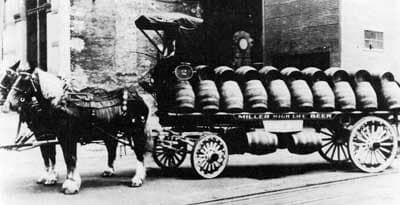
The brand's national prominence surged after the devastating Great Chicago Fire of 1871. Reports indicate that Schlitz sent beer to the ravaged city as part of the relief efforts, a humanitarian gesture that solidified its reputation and led to the iconic slogan, "the beer that made Milwaukee famous." By 1902, the Jos. Schlitz Brewing Co. had ascended to become the largest brewery in the world, a distinction it frequently shared with Anheuser-Busch throughout the first half of the 20th century. The company was also an industry innovator, introducing the brown bottle in 1911 to protect beer from light exposure, a design that was widely adopted across the brewing world.
However, the brand's fortunes began to turn in the 1970s due to a series of controversial business decisions. In an effort to cut costs and accelerate production, the company reportedly shortened its brewing time, replaced traditional malted barley with cheaper corn syrup, and experimented with silica gel to prevent haze. These changes significantly altered the beer's flavor and overall quality, leading to widespread customer dissatisfaction and a sharp decline in sales. A particularly damaging incident occurred in 1976 when a stabilizer reaction resulted in a cloudy, unappealing beer, forcing Schlitz to recall millions of bottles and incurring costs exceeding $1.4 million. Further compounding these issues was a poorly received 1977 advertising campaign, infamously known as the "Drink Schlitz or I'll kill you" campaign, which featured aggressive loyalists and was quickly withdrawn, leading to the firing of the ad agency responsible.
The Uihlein family, who had owned Schlitz since the 1870s following Joseph Schlitz's death in 1875, eventually sold the company to Stroh Brewing in 1982. The original Milwaukee brewery had already closed its doors in 1981. Pabst Brewing Company later acquired the Schlitz brand in 1999 and attempted a relaunch in 2008, though public reception indicated that the new formula did not fully meet customer expectations.
The news of Schlitz's impending discontinuation has sparked a mix of reactions from industry figures and the public alike. While Pabst's Zac Nadile used the term "hiatus" to leave the door open for a future revival, brewmaster Kirby Nelson's dedication to a "proper sendoff" speaks to the brand's deep cultural resonance. Online, the announcement has fueled a flurry of activity, including a Change.org petition urging Pabst to continue production, and nostalgic discussions on beer forums where fans share memories and tips for finding remaining stock.
Jim Haertel, who serves as chief steward and owner of Best Place at the Historic Pabst Brewery in Milwaukee, succinctly captured the brand's historical significance within its home city. He remarked, "Oh, in Milwaukee, you were either drinking Pabst or Schlitz," highlighting how deeply intertwined Schlitz was with the local identity and the broader American beer landscape for generations.
The cessation of Schlitz production marks a profound moment for Milwaukee's brewing identity, a city renowned for its beer heritage. For nearly two centuries, Schlitz was not just a beverage; it was a symbol of American industry, innovation, and taste, evolving from a local Milwaukee staple to a global leader. Its story reflects the dynamic shifts within the American beer market, from the golden age of regional breweries to the challenges of corporate consolidation and changing consumer preferences.
The brand's journey, from its ambitious beginnings with Georg August Krug and Joseph Schlitz to its peak as the world's largest brewery and subsequent decline, offers a compelling narrative of business triumph and missteps. The "beer that made Milwaukee famous" ultimately succumbed to the pressures of an evolving market, leaving behind a legacy that continues to resonate with those who remember its glory days and its place in American culture.
As the final barrels are brewed and distributed, the industry watches to see if Pabst's "hiatus" phrasing holds any real promise for a future return or if this truly marks the definitive last call for Schlitz. For now, the "love letter to our state" from the Wisconsin Brewing Company will serve as a dignified farewell to a brand that poured its way into the fabric of American history.