 Culture
Rare Blue Micromoon Set to Dazzle Weekend Sky
A celestial spectacle unlike any other in decades is set to grace the night sky this weekend. Stargazers worldwide are preparing for the rare convergence of a "blue moon" and a "micromoon," a combined phenomenon that won't be seen again for more than 25 years.
This unique event, dubbed the "blue micromoon," will reach its peak illumination early Sunday, May 31, 2026, at 4:45 a.m. Eastern Daylight Time. While the visual differences might be subtle, careful observers will be witnessing the smallest and most distant full moon of the year. The moon's full glow will be visible globally, offering a chance for millions to witness this rare alignment.

The "blue moon" aspect refers to the second full moon occurring within a single calendar month. May 2026 began with the "Flower Moon" on May 1, making the upcoming May 31 full moon the second. It's a timing rarity, not an actual color change, a distinction that gained prominence after a popular interpretation in a 1946 issue of Sky and Telescope magazine. Historically, the term also referred to the third of four full moons in an astronomical season.
Adding to its distinctiveness, this blue moon is simultaneously a "micromoon." This happens when a full moon coincides with its apogee, the point in its elliptical orbit where it is farthest from Earth. At this distance, approximately 252,360 miles from our planet, the moon appears about 10% dimmer and 6% smaller than an average full moon. It's also notably smaller – between 12.5% to 14.1% – compared to a supermoon, which occurs when the moon is at its closest point to Earth.
The extreme rarity of this specific blue micromoon combination is a key highlight. Reports suggest that a similar event is not anticipated to repeat for over two decades, with some projections placing the next occurrence in July 2053, or even as far out as December 2066 for certain regions. The last calendar-month blue moon was observed on August 31, 2023, with the next expected on December 31, 2028.
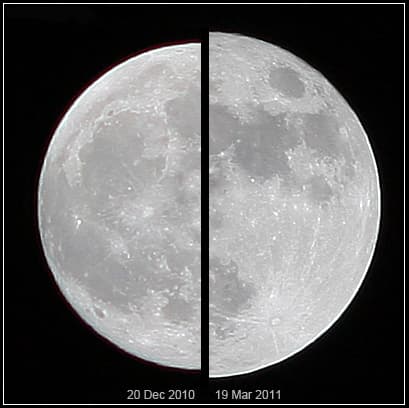
This May 2026 event is also part of a unique lunar sequence, marking the second of three consecutive full micromoons. The "Strawberry Moon" in June 2026 is also projected to be a micromoon, continuing this period of distant full moons. Even at its farthest point, the moon's gravitational pull continues to influence Earth. This micromoon will contribute to what are known as apogean spring tides, which may show a slight variation of about 2 inches less than typical full moon spring tides.
Beyond the primary lunar spectacle, skywatchers this weekend will have other cosmic treats. Venus and Jupiter are expected to be visible to the naked eye just after sunset. This follows earlier celestial events in May, including the Eta Aquarid meteor shower, a display originating from the debris of Halley's Comet. Furthermore, the period around the April 1st full moon saw the launch of Artemis II, a mission that will send astronauts around the moon for the first time in over five decades, marking a significant milestone in space exploration.
Experts have weighed in on the visual characteristics of this rare event. Gianluca Masi of the Virtual Telescope Project noted that the moon would appear "roughly 10% dimmer and 6% smaller than an average full moon." The Virtual Telescope Project, based in Manciano, Italy, plans to offer a live online observation, showcasing archival images of the moon set against iconic Roman monuments.
Other contributors have provided guidance for optimal viewing. Connor Greene, an Editorial Fellow, contributed to public reports detailing how to best observe the event. Marcy Curran of EarthSky released a video preview explaining the phenomenon, while Raquel Villanueva of NASA Science issued skywatching tips for May 2026, emphasizing the blue moon's rarity. Rishabh Nakra, in a report on The Secrets Of The Universe, also outlined various night sky events for May, including this blue micromoon.
Celestial events like the blue micromoon continue to captivate audiences globally, drawing attention to the wonders of our solar system. These rare occurrences not only provide stunning visual opportunities but also spark public interest in astronomy and scientific observation. They serve as a reminder of the intricate dance between Earth and its natural satellite, influencing everything from tides to ancient calendars and modern space missions.
For many, the opportunity to witness such an infrequent event is a moment to connect with the universe on a deeper level. While the subtleties in size and brightness may require keen observation or photographic equipment to fully appreciate, the sheer rarity of a blue moon coinciding with its farthest orbital point makes it a noteworthy occasion for both seasoned astronomers and casual sky-gazer alike.
As the weekend approaches, those hoping to catch a glimpse of this unique lunar phenomenon are encouraged to seek out clear skies and an unobstructed view, ideally away from the glare of city lights. In the Northern Hemisphere, observers can look for the moon near Antares, a bright star in the constellation Scorpius. Meanwhile, south of the equator and across the Pacific, some may even witness the moon temporarily obscuring Antares. This blue micromoon promises to be a memorable moment in the night sky, a quiet spectacle that underscores the ever-changing beauty above us.