CultureSome Black women see a gap in the world and decide they are the ones to fill it. This drive to build institutions and empower communities connects a trailblazing political giant like Shirley Chisholm to a modern-day safety advocate like Javondlynn Dunagan. Both women recognized a profound need within their communities and stepped forward to create the resources and platforms that were desperately missing.
In Chicago, Illinois, Javondlynn Dunagan has forged a path dedicated to personal safety and firearm education, particularly for women. Her journey began not with an immediate passion, but with overcoming a deep-seated fear. After a distinguished 25-year career as a United States Probation Officer, from which she retired in January 2016, Dunagan initially avoided firearms, even canceling training classes three separate times. However, a significant shift occurred following her divorce from a police officer. Finding herself feeling unsafe at home without a firearm, she decided to confront her anxieties head-on. By 2013, Dunagan began taking shooting classes, a decision that ultimately transformed her perspective and ignited a passion for firearms.
This personal transformation soon led to a broader mission. In March 2017, Dunagan established JMD Defense & Investigations LLC, also known as JMD Defense, LLC, in Chicago. Her company's core purpose is to empower individuals, with a special focus on women, to take charge of their own safety through comprehensive firearm education and self-defense training. Dunagan herself is a highly qualified expert, holding certifications as a Certified Firearm's Instructor and Range Safety Officer, and is recognized as a Distinguished Expert Shooter within the NRA Marksmanship Program. She is widely seen as a trailblazer within the firearm community and safety industry, carving out a vital niche.
A cornerstone of Dunagan's work is the Ladies of Steel gun club, which she founded in 2017. This club provides a crucial supportive environment where women can learn responsible firearm handling techniques and conquer any existing anxieties they might have. What began with an initial 17 members rapidly expanded, growing to over 100 individuals, and later reportedly encompassing 750 "sisters" dedicated to mutual support and empowerment. Her significant contributions to safety were publicly recognized in July 2018 when Project ChildSafe honored her as a S.A.F.E. leader.
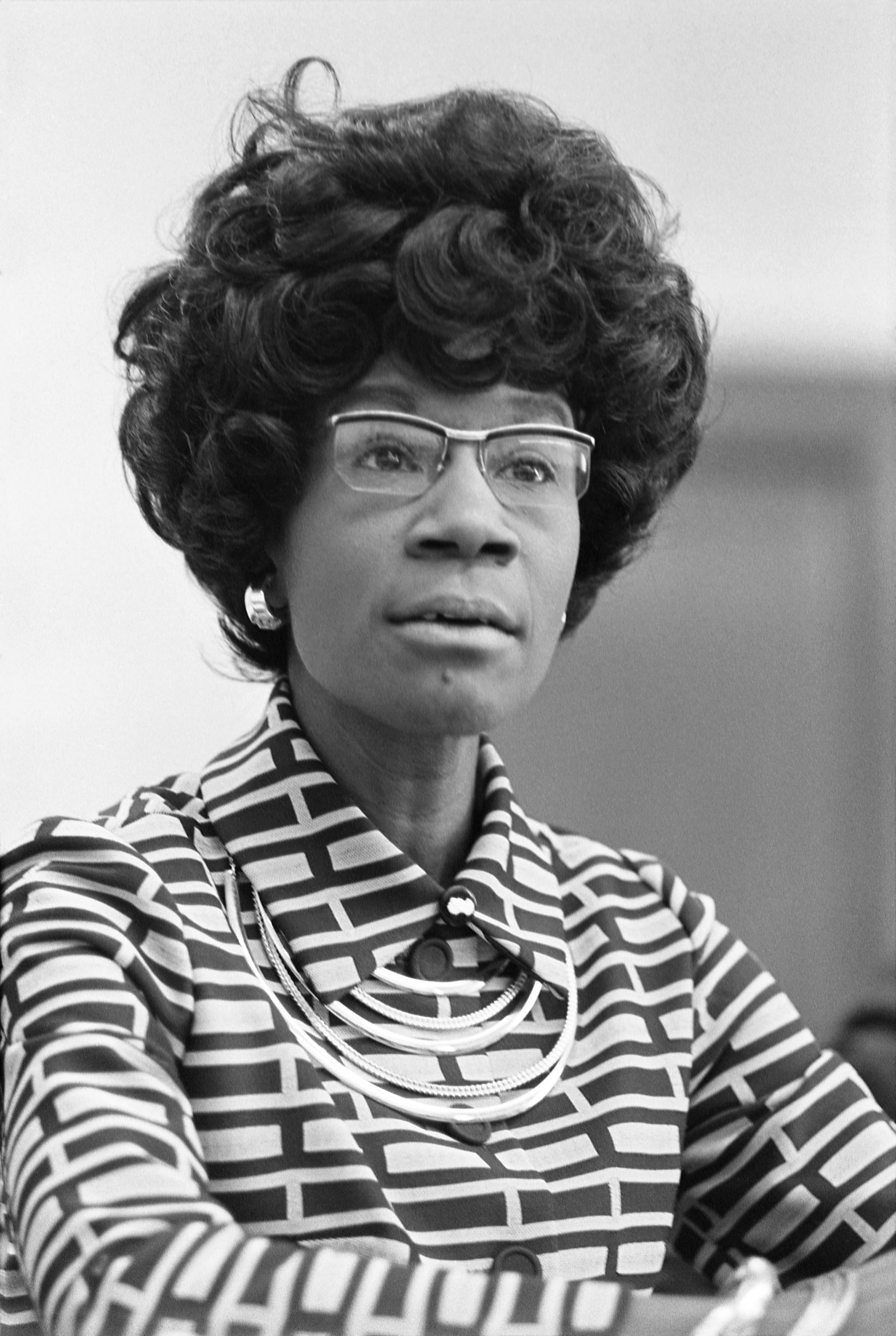
Javondlynn Dunagan's proactive spirit mirrors that of Shirley Chisholm, a monumental figure in American politics and a tireless advocate for marginalized communities. Born in New York in 1924, Chisholm's early career as an educator and child care manager in New York City exposed her directly to the daily struggles faced by the poor. These observations fueled her resolve to enter public service, a path that would see her break numerous racial and gender barriers. In the 1950s, Chisholm successfully campaigned for and won a seat in the New York State Legislature, laying the groundwork for her national impact.

Her political career soared to national prominence in 1968 when she made history as the first Black woman ever elected to the U.S. Congress, representing New York's 12th District. Not one to shy away from challenging the status quo, Chisholm continued to shatter expectations in 1972 by becoming the first woman and the first African American to seek the Democratic Party's presidential nomination, ultimately securing 151 delegate votes. Her courage in pursuing such a high office resonated deeply, even if the ultimate victory remained out of reach.
Throughout her seven terms in Congress, which spanned until 1982 or 1983, Chisholm was a fierce and effective champion for minorities, women, and children. She was a leading voice for improved employment and education programs, advocating for expanded day care, income support initiatives, and efforts to enhance inner-city life and opportunity. Beyond social programs, Chisholm also took strong stances on national policy, advocating for an end to the military draft and a reduction in defense spending. Her unwavering commitment to her principles was famously captured in her 1970 autobiography, "Unbought and Unbossed," a motto that perfectly encapsulated her outspoken advocacy. She followed this with her second book, "The Good Fight," published in 1973.
Chisholm was candid about the unique challenges she faced as a Black woman in politics. In 1982, she reportedly stated, "When I ran for Congress, when I ran for president, I met more discrimination as a woman than for being Black. Men are men." This powerful observation highlighted the intersectional discrimination that defined much of her groundbreaking career. Before her passing in 2005, Chisholm expressed her desire to be remembered as "a woman who dared to be a catalyst of change," a legacy that has undeniably been fulfilled through her enduring influence.
The legacies of Shirley Chisholm and Javondlynn Dunagan, though separated by generations and different spheres of influence, are united by a common thread: the imperative to create solutions where none exist. Chisholm built political pathways and legislative frameworks to uplift the disenfranchised. Dunagan, in turn, is building a community and educational infrastructure to empower women with the skills and confidence for personal safety. Both women embody the spirit of proactive leadership, transforming personal conviction into public action.
Their stories underscore a significant aspect of Black women's leadership: identifying a societal void and then dedicating oneself to filling it, often against considerable odds. Chisholm's work laid the foundation for future generations of Black women in politics, inspiring figures like Congresswoman Ayanna Pressley and former Senator Laphonza Butler. Similarly, Dunagan is fostering a new generation of empowered women in the realm of personal safety, creating a supportive network where vulnerability can be transformed into strength and self-reliance.
Together, their narratives illustrate a powerful, continuous lineage of Black women who not only dream of a better world but actively construct the institutions and opportunities needed to realize it. From the halls of Congress to the firing range, the commitment to community, empowerment, and unapologetic self-determination remains a vibrant and essential force, challenging existing norms and building a more secure and equitable future.