 Culture
Green Card Policy Chaos Eases After DHS Softens Stance
The Department of Homeland Security recently sent shockwaves through immigrant communities and legal circles with a policy announcement that initially seemed to upend the long-standing process for obtaining green cards from within the United States.
The U.S. Citizenship and Immigration Services (USCIS), a branch of DHS, issued Policy Memorandum PM-602-0199 on Friday, May 21, 2026. This was followed by a public announcement from Washington, D.C., on Friday, May 22, 2026, stating that immigrants applying for green cards would generally be required to return to their home countries and await processing abroad. The initial release specified that the only exceptions would be for those under "extraordinary circumstances," a term that remained undefined, fueling immediate concern.

USCIS Spokesman Zach Kahler publicly articulated the rationale behind the initial directive. He asserted that the department was "returning to the original intent of the law to ensure aliens navigate our nation's immigration system properly." Kahler further explained that "an alien who is in the U.S. temporarily and wants a Green Card must return to their home country to apply, except in extraordinary circumstances." He argued this approach would allow the immigration system to function as intended, rather than "incentivizing loopholes," and would reduce the need to locate and remove individuals who might "slip into the shadows" after being denied residency. Kahler also noted that nonimmigrants, such as students, temporary workers, or tourists, are expected to leave when their visit concludes, and their stay "should not function as the first step in the Green Card process." The memorandum itself underscored that adjustment of status (AOS) under Section 245 of the Immigration and Nationality Act (INA) is a matter of "discretion and administrative grace," an extraordinary form of relief not designed to replace the standard consular visa process.
The initial announcement triggered widespread alarm. Immigrants, business groups, and immigration lawyers voiced immediate fears that the policy would compel hundreds of thousands of individuals to depart the U.S., potentially leaving some stranded overseas, particularly given existing travel and entry restrictions. Immigration attorneys were inundated with questions, and reports even indicated uncertainty among some individuals working within the Department of Homeland Security itself regarding the changes and their full scope.
Lynden Melmed, who previously served as the top lawyer at USCIS during the George W. Bush administration, commented that the initial guidance would likely prove "burdensome" for both applicants and their legal representatives. He anticipated that individuals would need to submit substantially more evidence to justify their continued presence in the United States while their applications were processed. Doug Rand, another former DHS official, suggested that the memo’s primary target might be spouses of U.S. citizens, especially those who had overstayed their visas. Rand warned that if the administration were to force these spouses to apply from abroad, they could potentially face a 10-year bar before being permitted to re-enter the country.
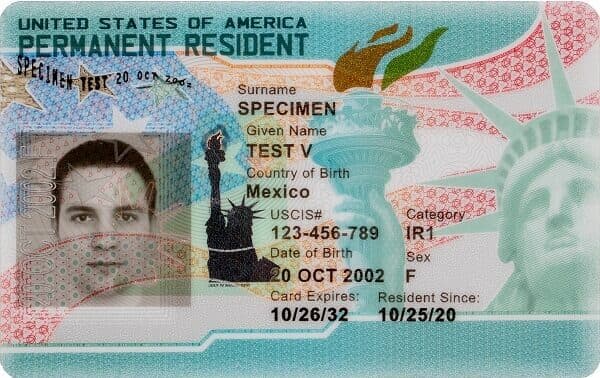
The "adjustment of status" process has been a critical pathway for decades, allowing hundreds of thousands of immigrants already legally residing in the United States—including spouses of U.S. citizens, students, and temporary workers—to obtain green cards without the requirement of leaving the country. This mechanism has been vital for keeping families together and retaining skilled professionals who contribute to the U.S. economy.
Denver-area immigration attorney Ian Rochstein expressed significant concern for his approximately 100 pending adjustment of status clients, many of whom are U.S. citizens married to foreign nationals. He cautioned that the policy could mean "families getting separated, just entirely blowing up people's lives." Rochstein also highlighted the critical lack of clarity surrounding the "extraordinary circumstances" standard. "The truth is we don't know what the standard of extraordinary is going to be," he stated. "It seems that USCIS doesn't know that, and the officers don't know that. They just have this directive from above." Violeta Chapin, an associate dean and immigration law professor, predicted an immediate decline in applications and anticipated future legal challenges, also warning that vulnerable applicants might seek advice from unreliable sources. Matthew Soerens, the U.S. director of church mobilization for World Relief, voiced "hope" and "expectation" that the guidance would not apply to refugees, who are mandated to process their green cards one year after arriving in the U.S. and cannot return to their home countries due to safety risks.
However, over the weekend that followed the initial announcement, DHS began to temper the perceived impact and scope of the policy. By Friday, May 30, 2026, the department had visibly softened its position. A DHS spokesperson issued a clarifying statement, asserting that there had been "no broad policy change." The department maintained that immigration officers had always retained the discretion to decide, on a case-by-case basis, whether an applicant needed to complete the green card process from outside the United States. In a statement to CBS News, DHS argued that the memo merely restated "longstanding law and policy" and that the "policy will not prevent any alien from obtaining a green card who legitimately and properly qualify."
DHS further explained that the guidance "will result in some aliens who do not merit the discretionary benefit ultimately applying with the Department of State overseas rather than USCIS in the United States." The department also sought to reassure, stating, "This policy will have no noticeable impact on highly qualified applicants and skilled professionals who have followed the law. These aliens benefit the national interest and provide economic benefits to the United States and will continue to merit the favorable exercise of discretion." This clarification aimed to distinguish between those deemed to be following the law and those who might be seen as attempting to circumvent established procedures.
Despite the department's efforts to clarify its stance, the initial announcement and the subsequent, somewhat contradictory, explanations have left the administration's true intentions open to interpretation. For the hundreds of thousands of individuals and families navigating the complex U.S. immigration system, the episode underscores a persistent environment of uncertainty and the significant impact that policy shifts, even those later softened, can have on their lives and futures.