Home
Explore
Notifs
Profile

Black-owned · Built for the global diaspora · Curated pins from Black and melanated creators across hair, style, beauty, home, and art.

Formerly Melaninterest.com

m
melanin
AboutHelpTermsPrivacyCommunity GuidelinesCreators

© 2026 Melanin. All rights reserved.

Mmelanin
HomeExploreCreatorsNewsCreate
Ctrl+K
Log inSign up
Mmelanin
HomeExploreCreatorsNewsCreate
Ctrl+K
Log inSign up
Gold Prices Dip Amidst Inflation Fears, Fed Rate Hike Speculation — Melanin News | Melanin
Mmelanin
HomeExploreCreatorsNewsCreate
Ctrl+K
Log inSign up
All news
Gold Prices Dip Amidst Inflation Fears, Fed Rate Hike SpeculationCulture

Gold Prices Dip Amidst Inflation Fears, Fed Rate Hike Speculation

5d ago

Gold prices took a hit this week, with the precious metal touching levels not seen since late March. The dip followed fresh U.S. inflation data that intensified worries about the Federal Reserve's potential to keep interest rates high for longer than anticipated.

On Thursday, May 28, 2026, spot gold slipped 0.6% to settle at $4,428.69 an ounce, while U.S. gold futures dropped 0.5%, closing near $4,426.20. This marked a significant decline, continuing a trend from the previous day. Wednesday, May 27, 2026, had already seen spot gold fall 1.3% to $4,447.71 per ounce, with June delivery futures closing 1.2% lower at $4,448.40 per ounce, marking the second straight day of losses for the metal.

Image related to Gold Prices Dip Amidst Inflation Fears, Fed Rate Hike Speculation
Related image from the original report Source

The catalyst for this market movement was the release of April's personal consumption expenditures (PCE) price index on Thursday. This index is closely watched by the Federal Reserve as a key measure of inflation. The report indicated that the PCE price index rose 3.8% year over year in April, meeting analysts' predictions. Month over month, the index climbed 0.4%, a slight moderation from the 0.7% increase observed in March. Core PCE, which strips out volatile food and energy costs, also aligned with forecasts, rising 3.3% year over year and 0.24% month over month. While these figures didn't exceed expectations, they underscored the persistent inflationary pressures across the economy.

Interestingly, gold managed to claw back some losses after the PCE data became public. Market watchers suggested this was due to the report offering a limited sense of relief, as it eased fears of an even sharper acceleration in inflation. Investors reportedly interpreted the data as a signal that the Federal Reserve might pause before implementing any additional rate hikes. Some analysts noted that steady inflation readings could encourage policymakers to maintain current borrowing costs rather than aggressively tightening monetary policy. However, the overall outlook for gold remained uncertain, influenced by recent statements from Federal Reserve officials.
Federal Reserve officials have continued to emphasize their focus on inflation. Minneapolis Federal Reserve President Neel Kashkari reiterated the central bank's commitment to containing inflationary pressures. Federal Reserve Governor Lisa Cook stated on May 29, 2026, that the central bank should currently maintain interest rates but remains open to future hikes if inflationary pressures, potentially stemming from tariffs, geopolitical tensions, and AI-driven investment, continue to escalate. John Briggs, head of US rates strategy at Natixis, expressed skepticism about the likelihood of a single rate hike by the Fed, noting that if the Fed moves on inflation, it would likely be multiple times. Briggs also cautioned investors against repeating past mistakes, referencing the misjudgment of oil price surges after the 2022 Russia-Ukraine conflict as transitory. His current assessment suggests the Fed will likely keep rates steady for an extended period.

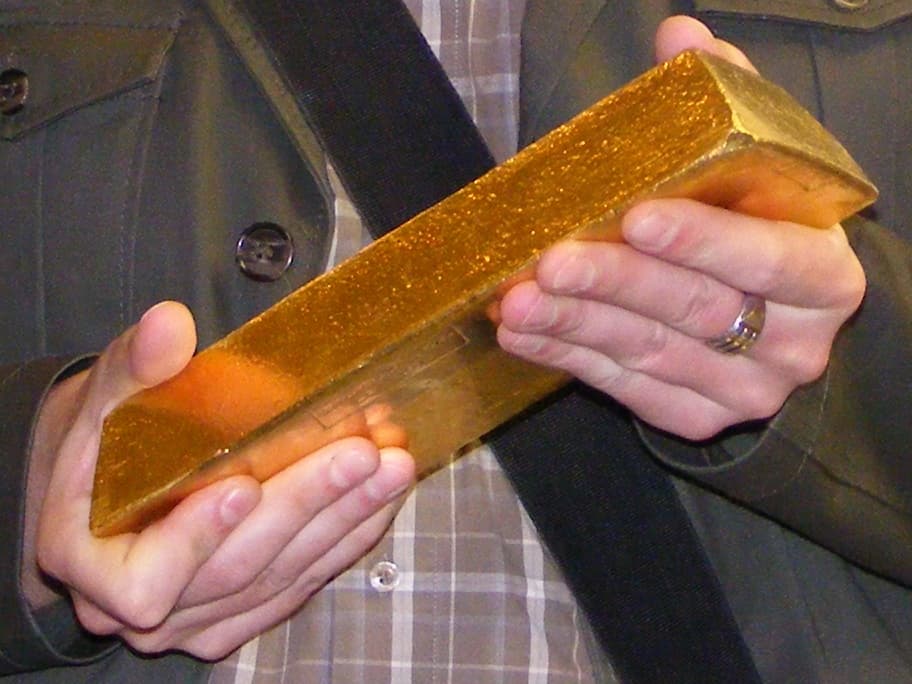
Gold as an investment
Gold as an investment Source

Adding another layer of complexity to the gold market are escalating geopolitical tensions, particularly those involving the United States and Iran in the Middle East. This instability has been a significant factor in driving up global oil prices, which in turn fuels inflation concerns. Peter Grant, Vice President and Senior Metals Strategist at Zaner Metals, commented on May 27, 2026, that the Middle East conflict continues to be the biggest influence on the market. He noted that the persistence of the Iran situation is heightening inflation worries and limiting the traditional safe-haven demand for non-yielding bullion. On the same day, U.S. President Donald Trump reportedly stated he “won't be rushed into a deal” concerning U.S.-Iran peace negotiations and that he doesn't “care about the midterms.” He affirmed that the Strait of Hormuz would be “open to everybody” and that the U.S. would “watch over it,” noting these terms were part of the negotiations. U.S. Secretary of State Marco Rubio indicated that the U.S. would give talks with Iran “every chance to succeed” and that some progress had been made.

Understanding the relationship between gold prices and interest rates is crucial for investors. Gold and interest rates typically have an inverse correlation: gold prices tend to rise when interest rates fall and vice versa. This is largely due to the opportunity cost of holding gold; when interest rates climb, interest-bearing assets like bonds and savings accounts become more appealing, drawing investors away from gold, which doesn't yield interest. A stronger U.S. dollar, often a consequence of higher interest rates, also makes gold more expensive for international buyers, thus reducing global demand. However, this relationship is not always straightforward, with market expectations, real interest rates (adjusted for inflation), and broader geopolitical developments all playing significant roles in influencing gold prices.

Prior to these recent movements, the Federal Reserve had held its benchmark interest rate unchanged at its April 2026 meeting, held from April 28-29. Minutes from that meeting, released in the week before May 28, 2026, had already contributed to uncertainty regarding the future direction of gold prices. As of May 27, 2026, the effective federal funds rate stood at 3.62%, with the Fed's target rate being 3.50%-3.75% as of May 26, 2026. The CME FedWatch Tool, which gauges market expectations, indicated a 70% chance of the Fed raising the federal-funds rate by the end of 2026. This included a more than 40% probability for a single quarter-point hike and a 22% chance of two hikes, as of May 26, 2026. This complex interplay of economic data, central bank policy, and global political events continues to shape the volatile landscape for gold investors.