CultureA brutal heatwave is tightening its grip across a vast stretch of the central and eastern United States, threatening to push "real feel" temperatures well past 100 degrees Fahrenheit for millions. Federal weather warnings are now active across at least 31 states, signaling a dangerous stretch of oppressive heat and humidity that could last through the upcoming holiday weekend. What started as a brief reprieve with pleasant conditions for some has quickly escalated into a serious health risk, prompting officials to urge caution as the region braces for record-breaking highs.
The National Weather Service (NWS) in Boston has issued an extreme heat watch, underscoring the severe danger of this atmospheric event. This isn't just about high temperatures; it's the relentless combination of soaring heat and thick, moisture-laden air that elevates the risk to life-threatening levels. On June 28, 2026, the heatwave was already intensifying, with areas like Phoenix and central Texas reporting temperatures around 100 degrees Fahrenheit. Over 130 million Americans, primarily across the southern and Great Plains states, were already experiencing moderate to severe heat risk conditions, a situation expected to worsen dramatically.
While Monday, June 28, 2026, offered a "rare gift" of warmth without heavy humidity for some, with overnight lows dipping into the low 60s, this comfort was fleeting. By June 29, 2026, the Upper Midwest was already experiencing peak dangerous heat, with heat index values climbing between 100 and 110 degrees Fahrenheit. Southeast Michigan, for instance, prepared for hot and humid conditions, with a high of 91 degrees Fahrenheit and potential heat index values reaching up to 100 degrees. The Michigan Department of Environment, Great Lakes, and Energy (EGLE) responded by issuing an air quality alert for elevated ozone levels in seven Southeast Michigan counties, including St. Clair, Livingston, Oakland, Macomb, Washtenaw, Wayne, and Monroe, warning that pollutants could reach levels "Unhealthy for Sensitive Groups."
Across the 31 U.S. states under alert, Extreme Heat Warnings, Extreme Heat Watches, and Heat Advisories were put into effect. Projections showed peak heat index values could soar as high as 115 degrees Fahrenheit (46 degrees Celsius). Specific regions like southeastern North Dakota, Union County in South Dakota, and various parts of Minnesota, Nebraska, Iowa, and Wisconsin were expected to see heat index values between 105 and 110 degrees Fahrenheit, indicating an exceptionally hazardous environment.
The progression of this heat event marks a significant shift from earlier, more bearable conditions. Tuesday, June 30, 2026, was dubbed "The Last Bearable Day," with forecasts predicting a gradual change in weather patterns. Mornings were expected to be brighter, followed by increasing afternoon clouds. Coastal areas were projected to remain in the 80s, while inland communities neared 90 degrees Fahrenheit. Southeast Michigan was slated for very hot and humid conditions, with a high of 98 degrees Fahrenheit and heat index values possibly hitting 102 to 108 degrees Fahrenheit. State College, Pennsylvania, was expected to reach 89 degrees Fahrenheit.

Wednesday, July 1, 2026, represented a critical turning point as temperatures were forecast to surge into the upper 90s by afternoon. The crucial element intensifying the danger was the dew points, which were expected to climb into the 70s. This combination would make the "real feel" well above 100 degrees Fahrenheit in numerous locations, severely taxing the body's natural cooling mechanisms. Southeast Michigan was anticipated to reach an actual temperature of 100 degrees Fahrenheit, with heat index values persisting between 102 and 108 degrees Fahrenheit. State College, Pennsylvania, was projected to hit 96 degrees Fahrenheit, with AccuWeather's RealFeel values reaching 104 degrees Fahrenheit.
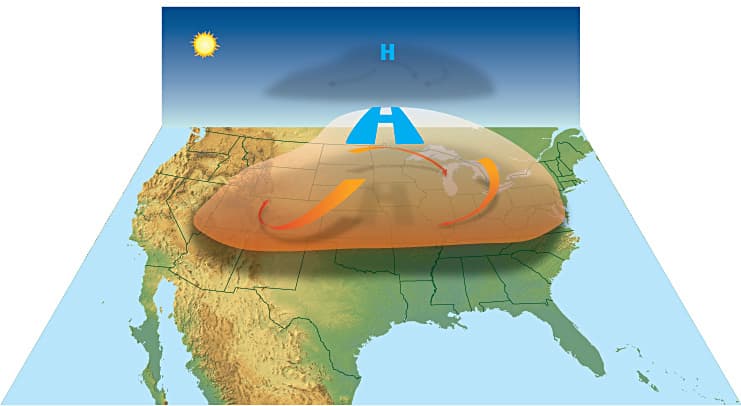
Thursday, July 2, 2026, was predicted to be "The Peak of the Dangerous Heat Surge." Actual air temperatures were expected to break into triple digits, and heat indices could potentially exceed 105 degrees Fahrenheit. Washington D.C. could see a high of 102 degrees Fahrenheit, a figure that would break a daily record if it holds. State College, Pennsylvania, had a projected high of 97 degrees Fahrenheit, which could tie a 1931 record for July 2. Adding to the concern, the National Weather Service issued a warning about "limited cooling at night mid week," with nighttime temperatures possibly remaining as high as 75 degrees Fahrenheit as a widespread heat dome settled over much of the eastern U.S.
Meteorologists have been vocal about the looming threat. AccuWeather meteorologist Alex DaSilva highlighted the severity, stating, "It's going to be extremely humid over these next couple of days. The humidity really starts on Wednesday before it becomes absolutely nasty leading into the holiday weekend." State officials in Michigan have also provided guidance, recommending that individuals avoid strenuous outdoor activity, especially those with heart disease and respiratory issues like asthma, due to the elevated ozone levels and extreme heat. Dempsey May Ayuco's initial reports on June 29, 2026, captured the fleeting nature of the preceding Monday's comfort before the severe conditions took hold.
This widespread and intense heatwave carries significant implications for public health and daily life across the affected regions. The sheer number of Americans under moderate to severe heat risk underscores the potential for widespread heat-related illnesses, power outages, and disruptions to outdoor activities and travel plans. The warnings from federal and state agencies are not merely advisories but urgent calls to action, emphasizing preparedness and vigilance during a period when the body's ability to regulate temperature is severely challenged.
The timing of this heat surge, leading into the July Fourth holiday weekend, adds another layer of concern. Many families traditionally engage in outdoor celebrations and travel during this period. The persistence of high heat, even into the nighttime hours, as warned by the National Weather Service, means little relief for residents, exacerbating the risks of heat exhaustion and heatstroke. This event tests the resilience of infrastructure and public health systems, requiring communities to activate cooling centers and disseminate critical safety information effectively.
As the heat is expected to persist through the July Fourth holiday weekend across the affected states, authorities continue to monitor conditions closely and update warnings. Residents in the path of this dangerous heat dome are advised to stay hydrated, seek air-conditioned environments, and check on vulnerable neighbors. The coming days will be a critical period for millions as they navigate the extreme conditions forecast to dominate the weather landscape.