CultureCava Group Inc. is making headlines, not for struggling, but for thriving. The Mediterranean fast-casual chain just upped its annual sales forecast, showing remarkable strength while many competitors are feeling the pinch of tight consumer wallets.
The company, trading on the New York Stock Exchange under "CAVA," announced on May 19, 2026, that it now expects same-store sales to climb as much as 6.5% for the full year. This is a significant jump from its earlier projection of 3.0% to 5.0% growth, a clear signal of confidence in its business model. This revised outlook follows a stellar first quarter for 2026, where the company significantly outperformed analyst expectations across multiple key metrics.
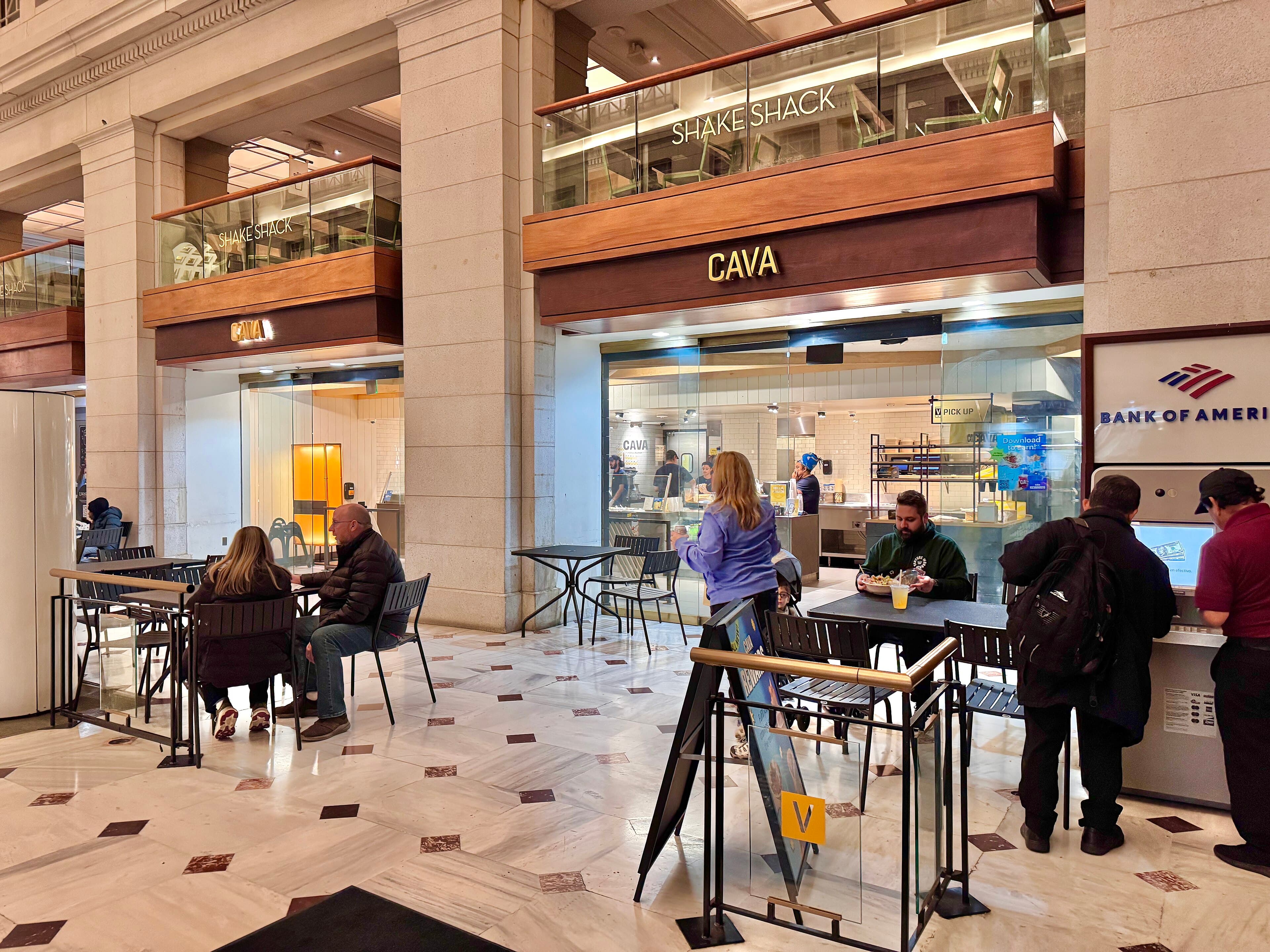
For the first quarter of 2026, Cava reported an impressive 32.2% year-over-year revenue growth, hitting $438.3 million, which easily surpassed the consensus analyst estimate of $418.2 million. Same-restaurant sales saw a substantial 9.7% increase, driven by a 6.8% rise in guest traffic and a 2.9% contribution from menu pricing and product mix. This also beat the 6.0% consensus estimate. The chain's adjusted earnings per share reached $0.20, outperforming projections of $0.17, while adjusted EBITDA surged by 37.6% year-over-year to $61.7 million. During this period, Cava expanded its footprint by opening 20 net new restaurants, bringing its total to 459 locations, a 20.2% increase from the previous year, including new ventures into Midwest markets like Cincinnati, St. Louis, and Columbus.
Cava's journey began in 2006 when three friends, Ted Xenohristos, Ike Grigoropoulos, and Dimitri Moshovitis, all children of Greek immigrants, opened their first full-service restaurant, Cava Mezze, in Rockville, Maryland. The fast-casual concept, Cava Grill, followed in 2011. Brett Schulman, who joined the company in 2009 to develop its consumer packaged goods business, later took the helm of the fast-casual expansion. Schulman, now Co-Founder and Chief Executive Officer, brought extensive experience from the investment banking world, including tenures at firms like Alex Brown and Deutsche Bank Alex Brown. He also previously served as Chief Operating Officer at Snikiddy LLC, a snack food company he helped grow into a multimillion-dollar enterprise.

Under Schulman's leadership, Cava has cultivated a reputation as a leading Mediterranean culinary brand, celebrated for its commitment to fresh, healthful ingredients and a distinct, chef-driven dining experience available in both its restaurants and grocery aisles. The company made its splash on the public market with an initial public offering (IPO) on June 15, 2023. Shares began trading on the New York Stock Exchange under the symbol "CAVA." The IPO priced 14.44 million shares at $22.00 each, raising approximately $317.78 million, funds intended to fuel future restaurant openings. Prior to this, Cava had confidentially filed its IPO plans in February 2023, making its public filing three months later. By the close of the first quarter of 2023, the company operated 263 restaurants across 22 states, with plans to open 34 to 44 new locations that year. Cava also strategically expanded its reach through the 2018 acquisition of Zoes Kitchen, converting many of those sites into Cava locations.

CEO Brett Schulman weighed in on the company's performance, emphasizing its ability to navigate current economic conditions. "Amid today's broader macroeconomic environment and geopolitical uncertainty, our first quarter results reflect our position as a clear industry leader and our ability to meet the moment for the modern consumer," Schulman stated. He further elaborated on the company's underlying strength, adding, "These results, which include the lap of strong prior year comparisons, speak to the structural strength of our business, the resonance of our compelling value proposition, and our position as the dominant leader in Mediterranean—all of which fuel our confidence to sustain this momentum going forward."
Cava's strong performance and optimistic outlook stand in stark contrast to the struggles faced by many within the restaurant sector. The industry as a whole has been grappling with a challenging consumer spending crisis, marked by declining customer traffic and reduced spending. Factors such as rising labor costs, persistent supply chain pressures, and general consumer caution have created a tough operating environment for many establishments. Cava's ability to not only weather these headwinds but to significantly grow its sales and expand its physical presence highlights a compelling truth about consumer behavior: even when budgets are tighter, diners are often willing to allocate funds for dining experiences that offer perceived value and quality.
The positive announcement on May 19, 2026, sparked an immediate and favorable reaction in the market, with shares of Cava Group (CAVA) rallying over 6% in after-hours trading. This surge occurred despite a mixed sentiment among analysts prior to the earnings report, with some maintaining "Hold" ratings due to valuation concerns, while others had already issued upgrades. Cava's consistent ability to attract new customers and increase the frequency of visits from its existing patron base positions it as a standout in the competitive fast-casual segment. Its strategy of focusing on fresh, healthful cuisine and a distinct culinary experience appears to resonate powerfully with modern consumers.
The revised full-year 2026 guidance further underscores this momentum. Cava now anticipates restaurant comparable sales growth of 4.5% to 6.5%, elevated adjusted EBITDA between $181 million and $191 million, and plans to open 75 to 77 net new restaurants. The company also projects a full-year restaurant-level profit margin of 23.7% to 24.3%. While net income for the quarter saw a slight decrease to $23.6 million from $25.7 million in the prior year, attributed to a higher effective tax rate and increased depreciation and amortization, the overall financial health and growth trajectory paint a picture of a company confidently expanding its market leadership in the Mediterranean segment. This sustained growth trajectory suggests Cava is well-positioned to continue its expansion and influence in the evolving dining landscape.