Home
Explore
Notifs
Profile

Black-owned · Built for the global diaspora · Curated pins from Black and melanated creators across hair, style, beauty, home, and art.

Formerly Melaninterest.com

m
melanin
AboutHelpTermsPrivacyCommunity GuidelinesCreators

© 2026 Melanin. All rights reserved.

Mmelanin
HomeExploreCreatorsNewsCreate
Ctrl+K
Log inSign up
Mmelanin
HomeExploreCreatorsNewsCreate
Ctrl+K
Log inSign up
BCRF Exec's Cancer Battle Fuels Push for Accurate Health Info — Melanin News | Melanin
Mmelanin
HomeExploreCreatorsNewsCreate
Ctrl+K
Log inSign up
All news
BCRF Exec's Cancer Battle Fuels Push for Accurate Health InfoCulture

BCRF Exec's Cancer Battle Fuels Push for Accurate Health Info

1w ago

Navigating a cancer diagnosis is daunting enough without the added challenge of sifting through a sea of online misinformation. For Sadia Zapp, the Managing Director of Communications and Content at the Breast Cancer Research Foundation (BCRF), her own breast cancer battle made this reality starkly clear, even for someone who "spoke breast cancer fluently."

Zapp, who had dedicated seven years to working with one of the nation's leading breast cancer organizations, received her diagnosis in July 2022 at the age of 36. This personal experience, roughly three and a half to four years prior to May 2026, has profoundly reshaped her advocacy, placing her journey at the heart of BCRF's mission to ensure women find reliable health information.

Breast Cancer Research Foundation
Breast Cancer Research Foundation Source

Her diagnosis came after a significant life change: a move from New York City to the suburbs. While settling into her new home and preparing her then four-year-old son for preschool, Zapp discovered a lump in her right breast. Her professional background at BCRF had equipped her with a crucial awareness of risk factors, including the heightened risk for breast cancer within a decade of a woman's first child, particularly if that child was born after age 30. Zapp, who had her son at 32, knew not to ignore the lump. She tracked it for a month before seeking medical advice when it showed no signs of changing.

During an appointment with a new doctor, a second lump was found in her armpit, which immediately raised concerns and led to a recommendation for imaging. Due to her dense breast tissue, Zapp underwent both a mammogram and an ultrasound. It was during this process that a radiologist delivered the news directly, stating, "We're going to get this biopsied, but I want you to know: This is breast cancer." Despite her initial disbelief, a second radiologist during the biopsy echoed the same confidence, indicating the biopsy was primarily to identify the specific type of cancer.
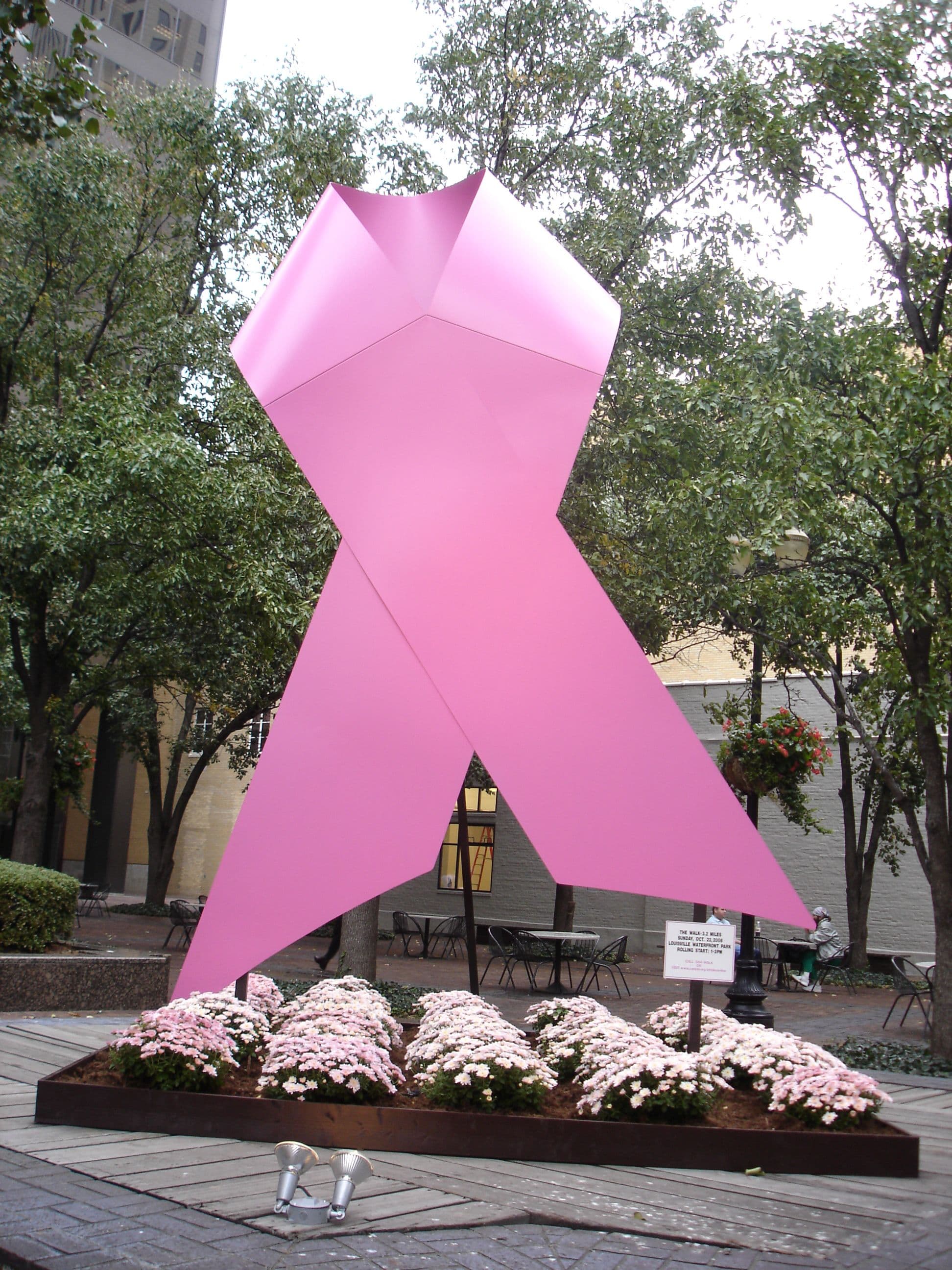
Zapp was ultimately diagnosed with hormone-positive, HER2-negative breast cancer that had spread to her lymph nodes. Her comprehensive treatment plan included four months of chemotherapy, a bilateral mastectomy, five weeks of daily radiation, and a DIEP flap reconstructive surgery performed six months later. Throughout this rigorous treatment, Zapp continued her work, finding support from her colleagues and emphasizing the critical importance of building a strong personal support team. As of December 2024, two and a half years post-diagnosis, Zapp reports having "no evidence of disease in [her] body right now," a phrase she prefers over "cancer-free" due to personal superstition. She credits her early self-detection of the lump as a key factor in her successful treatment.

Breast cancer awareness
Breast cancer awareness Source

Zapp's experience highlights the urgent need for accessible and accurate breast cancer information, especially for younger women. She observed that while she possessed a deep understanding of the disease, most newly diagnosed women lack such knowledge, forcing them to navigate a confusing online landscape. This personal insight is now central to BCRF's ongoing efforts to guide women toward trustworthy health resources.

In May 2026, BCRF launched a new national survey in collaboration with YouGov to better understand the challenges women face when seeking health information online. The survey revealed that nearly half of all adults have never searched for breast cancer information, and almost two out of five women lack any information about the disease. Compounding this issue, one in four Americans reported encountering contradictory online information that directly conflicted with their doctors' advice. However, the survey also offered a silver lining: 7% of adults, and notably 11% of younger women aged 18 to 34, stated that a social media post had directly inspired them to schedule a mammogram. Zapp commented on this finding, noting, "That signals that social media can inspire positive behavior." The survey also indicated that younger Americans are twice as likely to trust search engines or AI tools compared to older adults.

These findings resonate with a separate study from the previous year, which showed that 70% of women diagnosed under the age of 40 felt dismissed by their doctors and reported negative experiences during their path to diagnosis and treatment. Zapp reflected on this, stating, "That tells me the vast majority of younger women who present with breast cancer symptoms are forced to do their own research. Many of our healthcare providers have not caught up with the latest information on breast cancer incidence increasing in younger populations. There is still a common misperception that breast cancer cannot happen to you when you are younger."

To counter the widespread misinformation and reinforce the need for trusted sources, BCRF initiated a social-first campaign in the spring of 2026 titled "I Did My Own Research." This campaign aims to spotlight the scientists who conduct actual research and demonstrate how "true science leads to the kind of breakthroughs that save lives." Zapp offered clear advice: "One of the ways you tell what is real and what is not is by going to trusted sources like the Breast Cancer Research Foundation. If you are using ChatGPT or Claude, or any of these AI platforms, check the source information." She further stressed, "Doing your own research is a good thing. It is just making sure that the bar for what is true and what is not is very high. For a lot of patients, especially cancer patients, it is a life-or-death scenario. You have to take this seriously, especially when you are making decisions about your own health."

BCRF has consistently worked to provide reliable information. In May 2025, the organization expanded its online resources with "About Breast Cancer" and the "Breast Cancer Glossary," specifically designed to offer trustworthy and accessible information for patients, caregivers, and individuals seeking to understand their risk. Donna McKay, President and CEO of BCRF, stated, "Launching these resources to kick off Women's Health Week has never been more salient." Elizabeth Sile, Director of Content at BCRF, added, "Whether you're facing your risk, undergoing treatment, or navigating a metastatic breast cancer diagnosis, research-backed resources are so critical—especially when misinformation is so prevalent online." Dr. Dorraya El-Ashry, Chief Scientific Officer at BCRF, also noted, "Women deserve more than hope—they deserve real knowledge and empowerment. BCRF Founder Evelyn H. Lauder deeply believed that knowledge is, in fact, power. With the launch of these tools, we honor her legacy by equipping women with the essential information they need to make informed decisions about their health."

Zapp's personal story, combined with BCRF's data-driven initiatives, underscores a vital message: in an age of abundant information, discerning reliable health guidance is paramount. The organization continues to champion research and education, aiming to empower individuals with the knowledge necessary to navigate their health journeys effectively and confidently.