 Hip-HopHip-Hop
The U.S. Army is stepping into the modern soundscape. For the first time in its history, the military branch has officially welcomed hip-hop artists into its ranks, a groundbreaking move aimed at connecting with a new generation. This strategic shift is fronted by Staff Sgt. Lamar Riddick, a North Carolina native whose journey from independent artist to uniformed performer is now making history within The United States Army Field Band.
Riddick's role marks a significant evolution in military cultural engagement. He stands as one of the Army's initial full-time hip-hop artists, a position forged through a talent search that commenced in late spring 2021, with auditions held that September. Riddick, alongside fellow artist Nicholas Feemster, was selected to pioneer this new initiative. Their military journey began with basic training at Fort Sill in Oklahoma, where they arrived on January 18, 2022, graduating in mid-March of the same year.
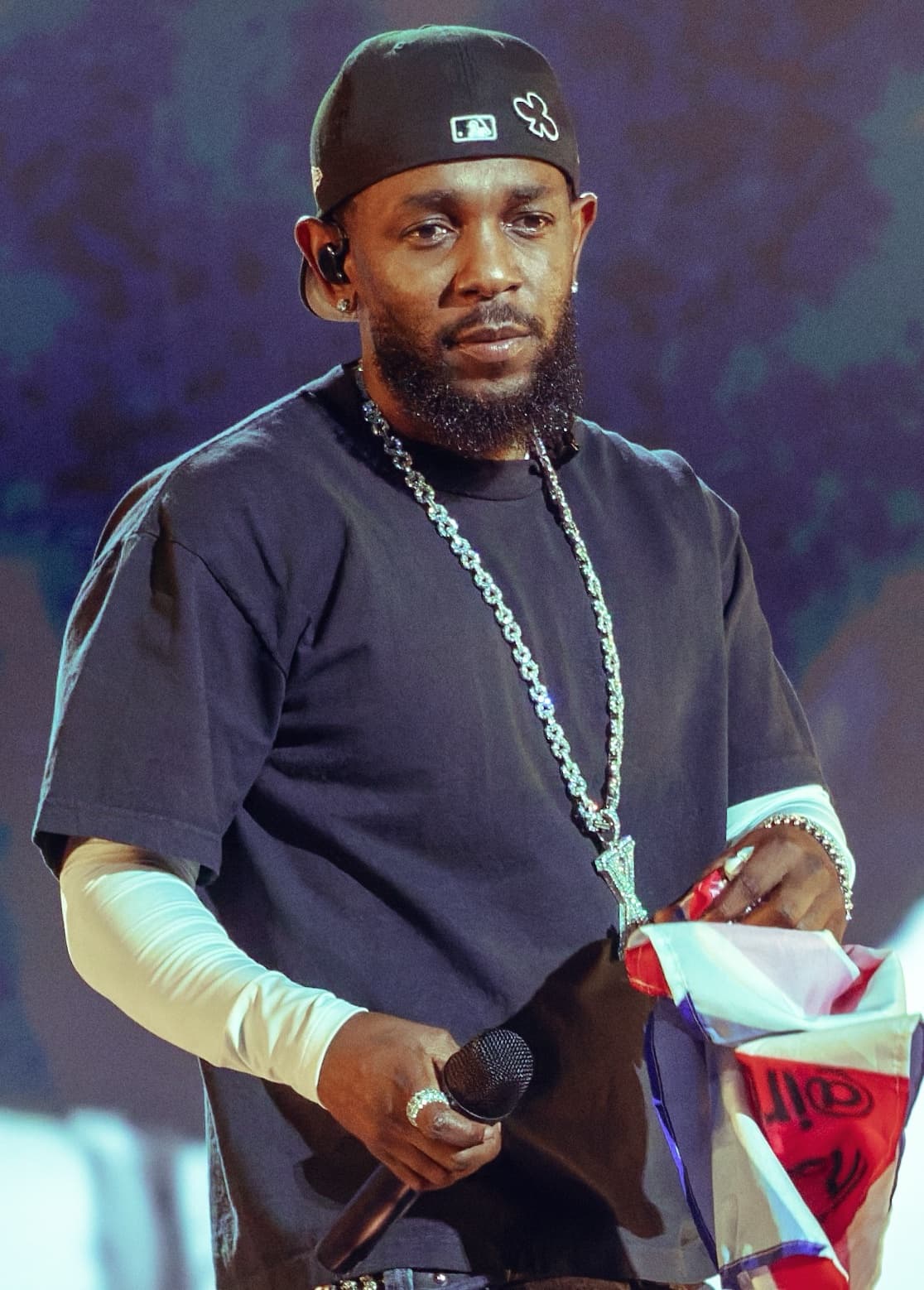
As integral members of the Army Field Band, Staff Sgt. Riddick and Feemster are tasked with a unique mission: touring globally to perform for both military personnel and civilian audiences. This innovative approach allows the Army to bridge traditional military outreach with the pervasive influence of hip-hop culture. Their lyrical debut on the international stage took place in August 2022 during the prestigious Royal Edinburgh Military Tattoo in Scotland, showcasing their skills to a global audience.
Their visibility has extended beyond live performances, with appearances on national television programs such as the Kelly Clarkson Show and PBS, bringing their story and the Army's new direction to millions. Looking ahead, Staff Sgt. Riddick is slated for an extensive summer tour with the Army Field Band. His upcoming performances include stops across Pennsylvania, New York, and New Jersey, with specific dates in Chautauqua, New York, on June 28, 2026; Williamsport, Pennsylvania, on June 29, 2026; Scranton, Pennsylvania, on June 30, 2026; Holmdel, New Jersey, on July 1, 2026; Philadelphia, Pennsylvania, on July 2, 2026; Bethlehem, Pennsylvania, on July 3, 2026; and Gettysburg, Pennsylvania, on July 4, 2026. These engagements underscore the Army's commitment to integrating contemporary music into its outreach efforts.
Born in Elizabeth City, North Carolina, on January 20, 1993, Lamar Riddick's passion for the performing arts was nurtured from a young age. His parents, recognizing his talent, supported his involvement in marching band, theater, choir, and dance throughout his high school years in Fort Lauderdale, Florida. This early dedication led him to Bethune Cookman University, where he earned a full academic and band scholarship, graduating with a Bachelor's degree in Music Recording Engineering. Riddick further honed his craft by completing a Music Business Certificate from New York University and was recognized in 2020 with an Eddy Award for Best Christian Rap Artist. Before donning a uniform, he pursued a career as an independent artist, releasing several digital albums, and also worked as a Program Assistant at the West Virginia University School of Music.

His unexpected path to military service began when a band director at West Virginia University stumbled upon an Army advertisement seeking an R&B and Hip-Hop artist. Riddick initially dismissed the idea, admitting, "At first, I thought it was a joke. Thought it was a scam." However, after prayer and discussions with his wife, he decided to explore the opportunity, a decision he later described as transformative for his life and career.
The audition process for this pioneering role was intense. During his tryout, Riddick performed "Revive," a powerful song he wrote in response to the 2016 deaths of Alton Sterling and Philando Castile. A self-described Christian rapper and the son of a police veteran with 30 years of service, Riddick articulated his respect for law enforcement while also emphasizing the importance of standing for one's beliefs and holding individuals accountable. His impactful lyrics, which included lines such as, "Officers please put your guns down / my hands are up and I'm getting on the ground / I promise not to reach for a weapon now / but the choice is yours you can grant me life or shoot me down," deeply resonated with the audition panel, cementing his place in this historic endeavor.
Staff Sgt. Riddick has frequently spoken about the profound impact of his military experience. He shared that "Being with the United States Army Field Band has been a great experience. Being able to travel the world, be surrounded by so many high-capacity musicians. I mean, the best in the world. And being able to couple talent together and perform on many stages has been life-changing. It's bettered me as an artist, as a person, and as my career in the military." His perspective highlights the personal and professional growth fostered by his unique position.
The Army's leadership also recognizes the significance of this cultural integration. Rob Piper, the communications director for the Army Field Band, affirmed the military's objective: "The Army is always looking for ways to better connect with and represent all Americans. Adding these talented artists, who can do so with passion and authenticity, is not only great talent management, but helps the Army better reflect society as a whole." These statements underscore a deliberate effort to evolve and engage with a broader demographic.
This strategic move by the Army to integrate hip-hop artists into its ranks represents a significant shift in its recruitment and cultural engagement strategies. It explicitly acknowledges hip-hop's pervasive global influence, recognizing it as one of the top streaming genres worldwide. Riddick himself pointed out the necessity of this approach, stating, "There's no hiding that Hip-Hop or rap music has been an influence in culture for years, right? If not the top, one of the top streaming genres in the world. So, if we want to be an entity that relates to people into our youth, we have to meet them where they are. We have to do the things that they're interested in, right? We can't just stay stuck in one way and expect to reach more people. We have to go out in the market and be with people." He expressed pride in his pioneering role, adding, "I think the Army opening up the genre space to include rap music has given that opportunity to bridge a gap that was there for some time. And so, I'm happy to be a pioneer in that lane."
This initiative is not the Army's absolute first venture into contemporary music for recruitment purposes. In February 2019, the U.S. Army Recruiting Command released a rap video titled "Giving All I Got," featuring Sgts. 1st Class Arlondo Sutton and Jason Brenner Locke, who were full-time recruiters at the time. This video was part of a new recruitment strategy implemented after the Army missed its goals in 2018, specifically designed to engage Generation Z by highlighting the benefits of military service. Historically, military bands have played a crucial role in boosting morale and representing American culture, with notable examples like pop bands such as East of Underground in the late 1960s and early 1970s, who toured military bases. The United States Army Field Band itself, established in 1946 after World War II, has a long-standing mission to connect soldier stories with civilians, performing over 400 times annually across all 50 states and 25 countries.
The inclusion of hip-hop artists like Staff Sgt. Lamar Riddick signifies a forward-thinking approach by the U.S. Army to remain relevant and connect with diverse audiences in an ever-evolving cultural landscape. This commitment to meeting young people where they are, through the music they love, is set to redefine how the military engages with society and attracts future talent. The Commercial Music Group, which now proudly includes the Army's first rapper, continues to engage a broad audience, ensuring that the rhythm of the streets also resonates within the ranks.